
Hypothyroidism: Diagnosis, Levothyroxine and Myxoedema Coma
Key points
- Hypothyroidism: deficiency of thyroid hormone. Around 95% of cases are primary, arising in the thyroid gland itself.
- Commonest cause in the UK: autoimmune thyroiditis - Hashimoto's with a goitre, or atrophic thyroiditis without one. Iodine deficiency remains the commonest cause worldwide.
- Primary hypothyroidism: high TSH with a low free T4. Subclinical disease is a high TSH with a normal free T4.
- Secondary hypothyroidism: a low or inappropriately normal TSH with a low free T4, indicating pituitary or hypothalamic disease. Do not miss it by screening with TSH alone.
- Levothyroxine dosing: 1.6 micrograms/kg/day in healthy young adults, but start at 25 to 50 micrograms in the elderly or in ischaemic heart disease and titrate slowly.
- Monitoring: recheck TSH 6 to 8 weeks after any dose change, then annually once stable. Target TSH within the reference range.
- Pregnancy: increase the dose by around 25 to 50% as soon as pregnancy is confirmed, and check thyroid function every 4 weeks in the first half.
- Myxoedema coma: hypothermia, bradycardia, hypoventilation and reduced consciousness. Give intravenous hydrocortisone before thyroid hormone, in case of coexisting adrenal insufficiency.
Introduction
Hypothyroidism is deficiency of thyroid hormone, and one of the commonest endocrine disorders encountered in general practice. It affects around 2% of women and 0.2% of men in the UK, with prevalence rising sharply with age, and subclinical disease is present in a further 5 to 10% of the population.2
Thyroid hormone regulates the basal metabolic rate of essentially every tissue, which is why deficiency produces such a diffuse and non-specific symptom set. The clinical challenge is less about recognising florid myxoedema - now rare - than about deciding whether a tired patient with a mildly raised TSH will actually benefit from treatment.
Causes
Primary - around 95% of cases
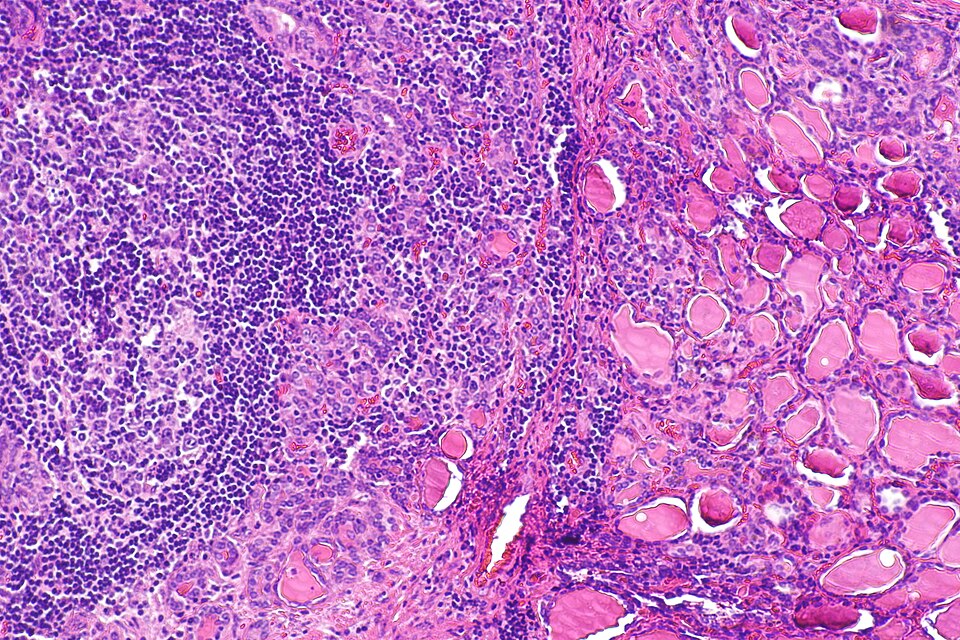
- Autoimmune thyroiditis - the commonest cause in iodine-replete countries. Hashimoto's thyroiditis produces a firm, painless goitre with lymphocytic infiltration; atrophic thyroiditis produces the same biochemistry with a small, impalpable gland. Anti-thyroid peroxidase (anti-TPO) antibodies are positive in around 90%.
- Iodine deficiency - the commonest cause worldwide, and still relevant in the UK in people avoiding dairy and fish, and in pregnancy
- Iatrogenic - after thyroidectomy, radioiodine treatment, or external beam radiotherapy to the neck. Following radioiodine for Graves' disease, hypothyroidism is expected rather than a complication.
- Drugs - amiodarone (which contains large amounts of iodine and can cause either hypo- or hyperthyroidism), lithium, interferon alfa, immune checkpoint inhibitors, thionamides, and iodinated contrast
- Transient thyroiditis - the hypothyroid phase of subacute (de Quervain's) thyroiditis, postpartum thyroiditis and silent thyroiditis. These typically follow a preceding thyrotoxic phase and often recover.
- Congenital - thyroid dysgenesis or dyshormonogenesis, detected by the newborn bloodspot screening test
- Infiltrative - Riedel's thyroiditis, haemochromatosis, amyloidosis and sarcoidosis
Secondary (central) - under 5%
- Pituitary disease - macroadenoma, surgery, radiotherapy, apoplexy, Sheehan's syndrome (postpartum pituitary infarction) or infiltration
- Hypothalamic disease - tumours, infiltration or trauma
- The biochemical signature is a low or inappropriately normal TSH with a low free T4, and it will be missed entirely if TSH alone is used to screen - which is why free T4 must be measured whenever pituitary disease is possible
- Always assess the other pituitary axes, and in particular exclude adrenal insufficiency before starting levothyroxine, since thyroid hormone increases cortisol clearance and can precipitate an adrenal crisis
Clinical features
Symptoms
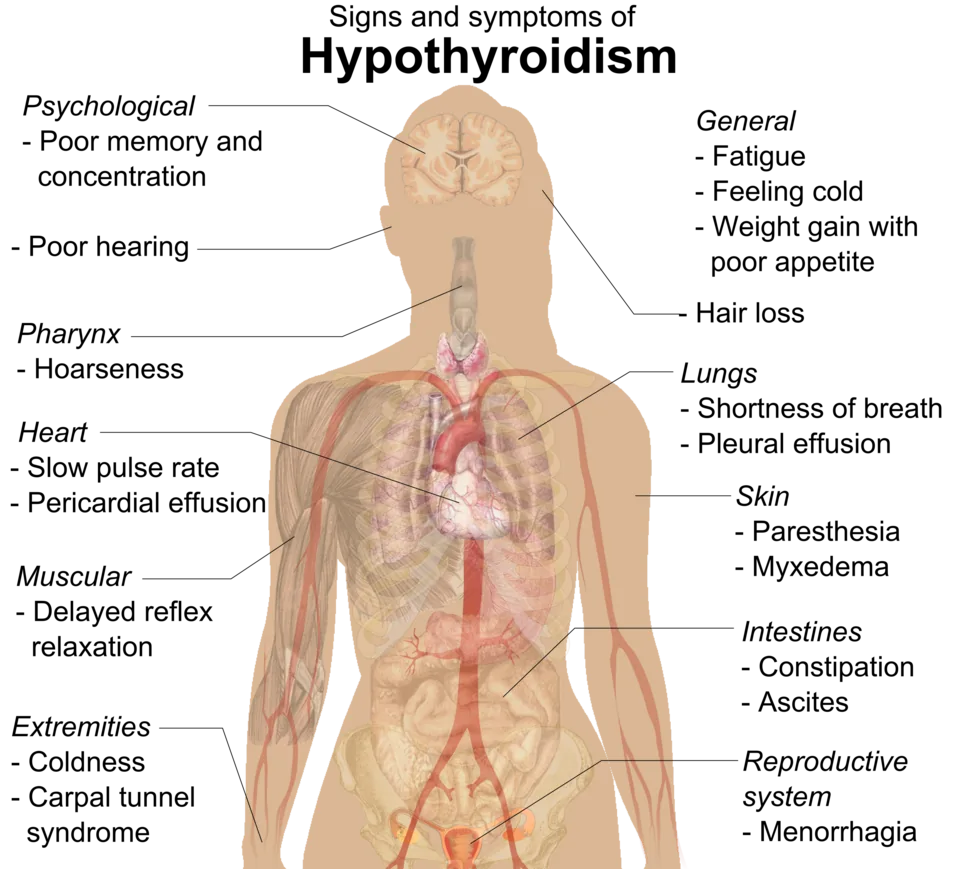
- Fatigue and lethargy - the commonest and least specific
- Weight gain with a poor appetite
- Cold intolerance
- Constipation
- Dry skin and hair, and hair loss
- Hoarse voice
- Menorrhagia, subfertility and reduced libido
- Low mood, poor memory and slowed thinking - and hypothyroidism should be excluded in any new presentation of depression or cognitive decline
- Myalgia, muscle cramps and paraesthesia - including carpal tunnel syndrome
- Deafness
Signs
- Bradycardia
- Dry, coarse, cool skin with a sallow or yellowish tinge from carotenaemia
- Periorbital puffiness and non-pitting oedema (myxoedema) from dermal glycosaminoglycan deposition
- Loss of the outer third of the eyebrows - a classic sign, though not specific
- Delayed relaxation phase of the tendon reflexes - the single most useful clinical sign, best sought at the ankle
- Goitre in Hashimoto's, or an impalpable gland in atrophic thyroiditis
- Macroglossia and slow, hoarse speech
- Pericardial and pleural effusions, and ascites in severe disease
- Hypothermia
Investigations
| TSH | Free T4 | Interpretation |
|---|---|---|
| High | Low | Primary hypothyroidism |
| High | Normal | Subclinical hypothyroidism |
| Low or normal | Low | Secondary (central) hypothyroidism - investigate the pituitary |
| High | High | TSH-secreting pituitary adenoma, thyroid hormone resistance, or assay interference - rare, and refer |
| Low | High | Hyperthyroidism |
| Low | Low or normal | Non-thyroidal illness (sick euthyroid syndrome), recent treatment for thyrotoxicosis, or central hypothyroidism |
Further tests
- Anti-TPO antibodies - confirm autoimmune aetiology, and predict progression from subclinical to overt hypothyroidism. There is no value in repeating them once positive.
- Full blood count - normocytic anaemia is common; a macrocytic anaemia suggests coexisting pernicious anaemia
- Lipids - hypothyroidism raises total and LDL cholesterol, which corrects with treatment. Recheck lipids once euthyroid before starting a statin.
- Creatine kinase - often raised, and hypothyroidism is a recognised cause of an unexplained high CK and myopathy
- Sodium - hyponatraemia is common
- Prolactin - may be mildly raised, since TRH stimulates prolactin release
- Coeliac serology and vitamin B12, given the autoimmune associations
- Thyroid ultrasound - only if there is a palpable nodule or asymmetry, not for diffuse goitre with typical biochemistry
Management
Levothyroxine
- Starting dose in a healthy adult under 65 - approximately 1.6 micrograms/kg/day, which for most adults means 75 to 125 micrograms daily. Some clinicians start at a full replacement dose in young, otherwise well patients.
- Starting dose in patients over 65, or with ischaemic heart disease - 25 to 50 micrograms daily, increased in 25 microgram steps every 4 weeks. Rapid replacement raises myocardial oxygen demand and can precipitate angina, infarction or arrhythmia.
- Recheck TSH 6 to 8 weeks after starting or changing the dose - testing earlier is uninterpretable because TSH takes that long to re-equilibrate
- Once stable, check TSH annually
- Target - TSH within the laboratory reference range, aiming for the lower half (around 0.4 to 2.5 mU/L) in younger patients, and accepting a higher value in the frail elderly
- In secondary hypothyroidism, TSH is useless for monitoring - titrate against the free T4, aiming for the upper half of the reference range
Subclinical hypothyroidism
A raised TSH with a normal free T4. The decision to treat rests on the TSH level, symptoms, age and antibody status.1
| Situation | Action |
|---|---|
| TSH above 10 mU/L on two occasions 3 months apart, aged under 70 | Offer levothyroxine |
| TSH above 10 mU/L, aged 70 or over | Consider watchful waiting with repeat testing rather than automatic treatment |
| TSH 4 to 10 mU/L with symptoms, aged under 65 | Consider a 6-month trial of levothyroxine. If symptoms do not improve, stop it - this stopping rule is frequently forgotten. |
| TSH 4 to 10 mU/L, asymptomatic or aged 65 and over | Monitor - repeat thyroid function in 6 months, then annually |
| Any subclinical hypothyroidism in pregnancy or planning pregnancy | Treat, and refer for specialist advice |
Positive anti-TPO antibodies predict progression to overt hypothyroidism at around 4% per year and lower the threshold for treating.
Pregnancy
- Thyroid hormone requirements rise by around 25 to 50% from early in the first trimester, driven by increased thyroid-binding globulin and placental deiodination
- Increase the dose as soon as pregnancy is confirmed - a common approach is two extra tablets a week - and refer to the specialist team
- Check thyroid function every 4 weeks until mid-pregnancy, then at least once in the third trimester, using trimester-specific reference ranges
- Return to the pre-pregnancy dose after delivery and recheck at 6 weeks
- Untreated maternal hypothyroidism is associated with miscarriage, pre-eclampsia, preterm birth, low birth weight and impaired neurodevelopment - the fetus depends entirely on maternal thyroxine in the first trimester
- Levothyroxine is safe in pregnancy and breastfeeding and must not be stopped
Liothyronine and combination therapy
A minority of patients report persistent symptoms despite a normal TSH on levothyroxine. Liothyronine (T3), alone or combined with levothyroxine, is not recommended for routine use - the trial evidence does not show benefit, the preparation is short-acting and difficult to monitor, and it carries cardiac and bone risks. It should only ever be initiated by an endocrinologist. Before attributing symptoms to inadequate replacement, look for anaemia, coeliac disease, vitamin D or B12 deficiency, diabetes, adrenal insufficiency, sleep apnoea, depression and the menopause, all of which are commoner explanations.
Myxoedema coma
A rare but life-threatening decompensation of severe, usually long-standing and untreated hypothyroidism, with a mortality of 20 to 40% even when treated. The name is misleading - most patients are drowsy or confused rather than comatose.
Complications
- Cardiovascular - dyslipidaemia, accelerated atherosclerosis, diastolic hypertension, bradycardia, pericardial effusion and, rarely, tamponade
- Myxoedema coma
- Reproductive - subfertility, menorrhagia, miscarriage and pregnancy complications
- Neurodevelopmental - untreated congenital hypothyroidism causes irreversible intellectual disability and growth failure, which is why newborn screening exists and why treatment must start within the first 2 to 3 weeks of life
- Neurological - carpal tunnel syndrome, peripheral neuropathy, cerebellar ataxia and, rarely, Hashimoto's encephalopathy (a steroid-responsive encephalopathy with high anti-TPO titres)
- Psychiatric - depression, cognitive impairment and, rarely, psychosis (myxoedema madness)
- Musculoskeletal - myopathy with a raised CK, and rhabdomyolysis particularly when statins are added
- Thyroid lymphoma - a rare but recognised complication of long-standing Hashimoto's thyroiditis, suggested by a rapidly enlarging goitre
- Iatrogenic thyrotoxicosis from over-replacement, causing atrial fibrillation and osteoporosis
Red flags
Prognosis
The prognosis of treated hypothyroidism is excellent. Levothyroxine is inexpensive, well tolerated and highly effective, and a patient established on the correct dose has a normal life expectancy and no restriction on activity. Symptoms typically improve over 2 to 6 weeks, though hair and skin changes may take several months to reverse, which is worth saying in advance.
Treatment is almost always lifelong. The exceptions are the transient thyroiditides - postpartum, subacute and silent thyroiditis - where the hypothyroid phase often resolves, and it is reasonable to attempt withdrawal of levothyroxine after 6 to 12 months with monitoring. Postpartum thyroiditis recurs in a substantial proportion of subsequent pregnancies and around a quarter of affected women develop permanent hypothyroidism.
Two practical caveats temper the optimism. First, around 10 to 15% of patients report persistent symptoms despite biochemical normalisation - a genuine and often dismissed problem that warrants a search for coexisting conditions rather than either escalating the dose or dismissing the complaint. Second, over-treatment is common and not benign: a suppressed TSH sustained over years measurably increases the risk of atrial fibrillation and osteoporotic fracture, so the annual blood test exists to catch too much thyroxine as much as too little.
References
- NICE NG145. Thyroid disease: assessment and management. 2019, updated 2023. Available here
- NICE Clinical Knowledge Summaries. Hypothyroidism. Available here
- British Thyroid Association / Association for Clinical Biochemistry. UK guidelines for the use of thyroid function tests. Available here
- Okosieme O, Gilbert J, Abraham P et al. Management of primary hypothyroidism: statement by the British Thyroid Association Executive Committee. Clinical Endocrinology. 2016. Available here
- NICE NG3. Diabetes in pregnancy, and BTA guidance on thyroid disease in pregnancy. Available here
- GOV.UK. Newborn blood spot screening programme handbook - congenital hypothyroidism. Available here
- BNF. Levothyroxine sodium and liothyronine sodium. Available here
- Mikael Haggstrom, CC0, via Wikimedia Commons. Available here
- Librepath, CC BY-SA 3.0, via Wikimedia Commons. Available here
This article is written for revision and education. It is not clinical guidance and must not be used to make decisions about the care of a patient. Always check current NICE guidance and local protocols.