
Hypoglycaemia: Recognition, Treatment and Finding the Cause
Key points
- Definition in diabetes: a blood glucose below 4.0 mmol/L - four is the floor. Severity is defined by whether the person needed help, not by the number.
- Definition without diabetes: Whipple's triad - symptoms of hypoglycaemia, a documented low glucose, and resolution of symptoms when glucose is restored.
- Two symptom groups: autonomic symptoms appear first at around 3.8 mmol/L - sweating, tremor, palpitations, hunger. Neuroglycopenic symptoms follow below about 2.8 mmol/L - confusion, slurred speech, seizures, coma.
- Conscious and able to swallow: 15 to 20 g of quick-acting carbohydrate, repeated up to three times at 15-minute intervals, then long-acting carbohydrate.
- Unconscious or fitting: 75 to 100 ml of 20% glucose intravenously, or 1 mg of glucagon intramuscularly if there is no access. Avoid 50% glucose.
- Glucagon fails: where hepatic glycogen is depleted - in alcohol excess, prolonged starvation, liver disease, and after a previous dose.
- Do not omit the next insulin dose: after treating a hypoglycaemic episode. Review the regimen instead, and give long-acting carbohydrate to prevent recurrence.
- The diagnostic sample: in hypoglycaemia without diabetes, take glucose, insulin, C-peptide, ketones and a sulfonylurea screen at the time of the low glucose - before treating.
Introduction
Hypoglycaemia is the commonest acute complication of diabetes treatment and the principal factor limiting how tightly glucose can be controlled. In people with diabetes it is defined as a blood glucose below 4.0 mmol/L - the mnemonic four is the floor - a threshold set deliberately above the level at which symptoms occur, to allow a margin for treatment.
In someone without diabetes, a low glucose reading alone is not enough. The diagnosis requires Whipple's triad: symptoms consistent with hypoglycaemia, a documented low plasma glucose at the time of those symptoms, and relief of the symptoms when the glucose is restored. Applying this triad prevents a great deal of unnecessary investigation of low readings on inaccurate meters in asymptomatic people.
| Level | Definition |
|---|---|
| Level 1 (alert value) | Glucose below 3.9 mmol/L (UK practice uses below 4.0). Requires treatment with fast-acting carbohydrate. |
| Level 2 (clinically significant) | Glucose below 3.0 mmol/L, indicating serious, clinically important hypoglycaemia |
| Level 3 (severe) | Any episode requiring the assistance of another person to recover, regardless of the glucose value. This is the definition that matters for driving and for DVLA notification. |
The physiology of counter-regulation
Understanding the sequence explains both the symptoms and why impaired awareness develops.
- Around 4.6 mmol/L - endogenous insulin secretion is suppressed. This is the first defence, and it is absent in anyone on exogenous insulin or a sulfonylurea.
- Around 3.8 mmol/L - glucagon and adrenaline are released. Glucagon is the principal counter-regulatory hormone, and the adrenaline surge produces the autonomic warning symptoms.
- Around 3.0 mmol/L - cortisol and growth hormone are released, and autonomic symptoms are usually well established
- Below about 2.8 mmol/L - the brain runs short of substrate and neuroglycopenic symptoms appear
- Below about 1.5 mmol/L - seizures, coma and, if prolonged, permanent neurological damage
In long-standing type 1 diabetes, the glucagon response is lost within about 5 years, leaving adrenaline as the only remaining defence - and repeated hypoglycaemia blunts that too. This is the mechanism of impaired awareness.
Clinical features
| Autonomic (appear first, around 3.8 mmol/L) | Neuroglycopenic (appear later, below about 2.8 mmol/L) |
|---|---|
| Sweating | Confusion and difficulty concentrating |
| Tremor and shakiness | Drowsiness |
| Palpitations | Slurred speech and incoordination |
| Hunger | Odd or aggressive behaviour - frequently mistaken for intoxication |
| Anxiety | Visual disturbance |
| Tingling around the lips | Focal neurology, including hemiparesis - which can mimic a stroke |
| Pallor | Seizures and coma |
Non-specific symptoms - headache, nausea and profound tiredness - are common and often the only feature in older people. In the very young and the very old, behavioural change may be the only sign, and in an inpatient the first indication is frequently a nurse reporting that the patient is "not themselves".
Causes
In people with diabetes
- Too much insulin or sulfonylurea - wrong dose, wrong insulin, wrong timing, or a dose given without the intended meal
- Missed, delayed or inadequate meals, or unexpected vomiting
- Exercise - during and for up to 24 hours afterwards, through increased insulin sensitivity
- Alcohol - inhibits gluconeogenesis and causes delayed hypoglycaemia several hours later, typically overnight
- Weight loss - reducing insulin requirements without a corresponding dose reduction
- Deteriorating renal function - insulin and sulfonylureas are renally cleared, so a falling eGFR predictably causes hypoglycaemia. A frequent and under-recognised cause in older patients.
- Injection into lipohypertrophy - producing erratic absorption
- Gastroparesis or coeliac disease - insulin absorbed before the carbohydrate is
- New Addison's disease or hypothyroidism - suspect when insulin requirements fall unexpectedly
- Breastfeeding
In people without diabetes
| Category | Causes |
|---|---|
| Drugs | The commonest cause overall - insulin or sulfonylurea taken accidentally or deliberately, quinine, quinolones, beta-blockers (which also mask the warning symptoms), pentamidine, high-dose salicylates |
| Alcohol | Inhibits gluconeogenesis, particularly in a fasted or malnourished person. A classic presentation is the intoxicated patient assumed to be simply drunk. |
| Critical illness | Hepatic failure, advanced renal failure, cardiac failure and sepsis |
| Endocrine | Adrenal insufficiency and hypopituitarism - cortisol and growth hormone deficiency remove key counter-regulatory defences |
| Insulinoma | A pancreatic neuroendocrine tumour, usually benign and solitary, causing fasting hypoglycaemia with inappropriately high insulin. May be part of MEN 1. |
| Non-islet cell tumours | Large mesenchymal tumours and hepatocellular carcinoma secreting IGF-2, which acts on the insulin receptor |
| Post-bariatric surgery | Late dumping syndrome with postprandial hyperinsulinaemic hypoglycaemia, typically 1 to 3 hours after eating |
| Factitious | Self-administered insulin or sulfonylurea, sometimes by a healthcare worker or in fabricated illness. Requires the C-peptide and sulfonylurea screen to detect. |
| Inborn errors of metabolism | Glycogen storage disease, fatty acid oxidation defects and hereditary fructose intolerance - presenting in childhood |
Immediate management
Treatment follows a ladder determined by the conscious level and the ability to swallow safely.1
Conscious, orientated and able to swallow
- Give 15 to 20 g of quick-acting carbohydrate - for example 4 to 5 glucose tablets, 150 to 200 ml of pure fruit juice, 60 ml of Glucojuice, or 3 to 4 heaped teaspoons of sugar dissolved in water
- Recheck the glucose after 15 minutes
- Repeat up to three times if the glucose remains below 4.0 mmol/L
- If still below 4.0 after three cycles, treat as for the uncooperative patient and consider intravenous glucose or intramuscular glucagon
- Once above 4.0 mmol/L, give 20 g of long-acting carbohydrate - two biscuits, a slice of toast, a sandwich, or 200 ml of milk - unless the patient is about to eat a meal, or is on a continuous intravenous insulin infusion which should simply continue
Conscious but uncooperative or unable to swallow safely
- Buccal glucose gel - 1.5 to 2 tubes of 40% glucose gel squeezed into the buccal cavity and massaged into the cheek
- Or intramuscular glucagon 1 mg
- Do not attempt to force oral fluids in a patient who cannot protect their airway
Unconscious, fitting, or nil by mouth
- Secure the airway and check the glucose
- Intravenous glucose - 75 to 100 ml of 20% glucose over 15 minutes, or 150 to 200 ml of 10% glucose. Avoid 50% glucose - it is viscous, highly irritant to veins and causes serious tissue injury if it extravasates.
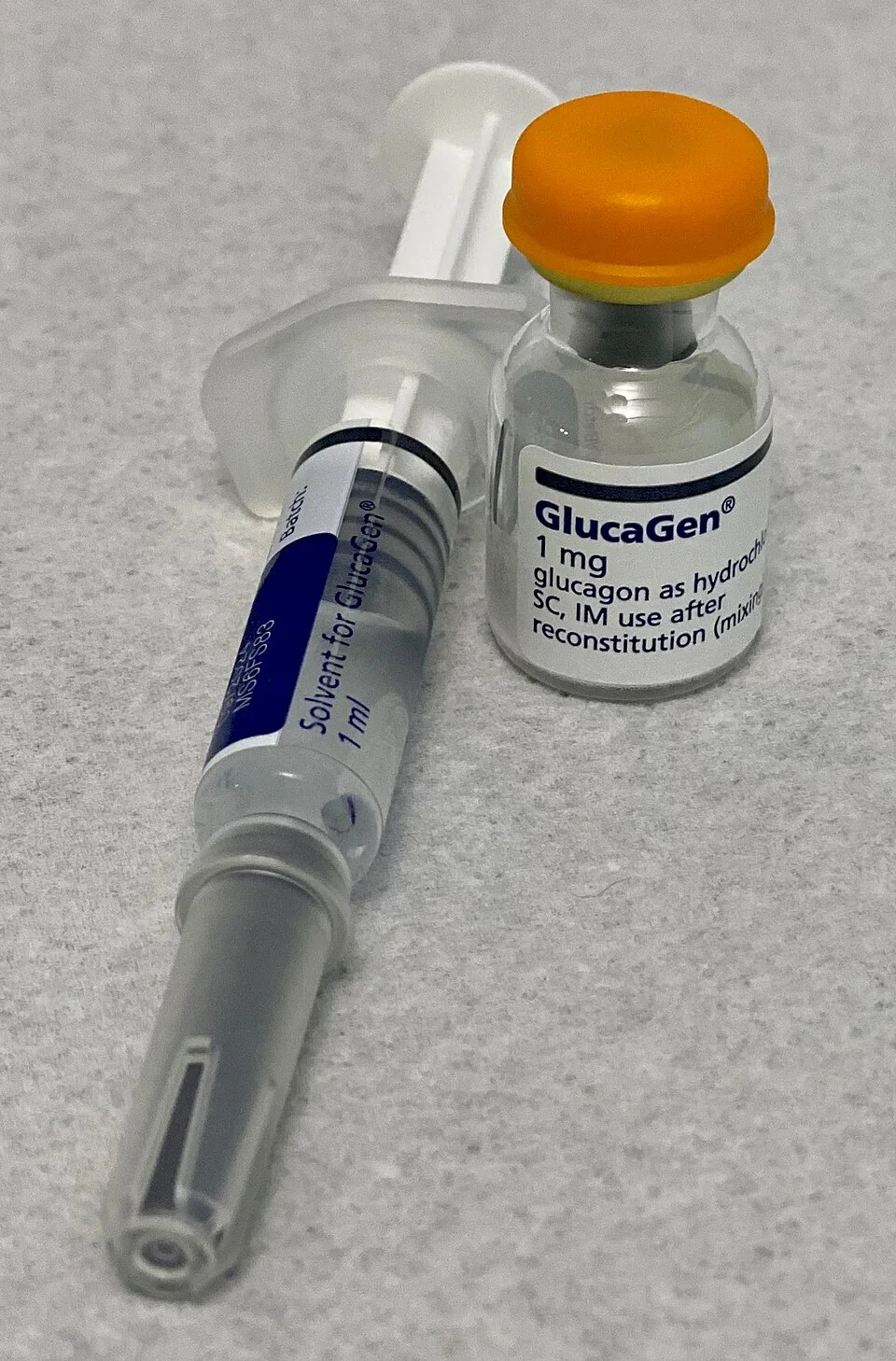
- If there is no intravenous access, give 1 mg of glucagon intramuscularly, and obtain access as soon as possible
- Recheck the glucose after 10 minutes and repeat if still below 4.0 mmol/L
- Once conscious, give long-acting carbohydrate
- Consider a 10% glucose infusion if hypoglycaemia recurs, particularly with sulfonylureas or long-acting insulin
After the episode
- Do not omit the next dose of insulin. This is a common and counterproductive reaction; the correct response is to give the long-acting carbohydrate and then review the regimen.
- Identify the cause - a missed meal, an unusual amount of exercise, alcohol, a dose error, an injection into lipohypertrophy, or deteriorating renal function
- Review the whole regimen with the diabetes team, including doses, timing, carbohydrate counting and injection technique
- Assess hypoglycaemia awareness with a Gold or Clarke score
- Consider technology - continuous glucose monitoring with alarms, or a hybrid closed loop system, both of which have specific NICE indications for disabling hypoglycaemia
- Check renal and thyroid function, and consider coeliac disease and Addison's disease if hypoglycaemia is recurrent and unexplained
- Discuss driving - a severe episode has DVLA implications, and two or more in 12 months means the licence is revoked
- Document it and ensure the primary care team knows, so the pattern is not missed across settings
- Ask about fear of hypoglycaemia - it is a major driver of deliberately running high glucose levels, and treating it improves control more reliably than exhortation does
Investigating hypoglycaemia without diabetes
Where Whipple's triad is satisfied in someone not taking glucose-lowering medication, the essential step is to obtain the right blood tests at the moment of hypoglycaemia and before treating. A sample taken afterwards is uninterpretable, and this single omission is the commonest reason the diagnosis is delayed by months.
- Take a hypoglycaemia screen at the time of the low glucose - laboratory glucose, insulin, C-peptide, beta-hydroxybutyrate, and a sulfonylurea screen, plus cortisol and growth hormone
- A supervised 72-hour fast is the definitive investigation where episodes are infrequent, performed in hospital with regular sampling and terminated when Whipple's triad is met
- Imaging - CT, MRI, endoscopic ultrasound or a Ga-68 DOTATATE PET scan to localise an insulinoma, which may be small and difficult to find
| Insulin | C-peptide | Ketones | Sulfonylurea screen | Diagnosis |
|---|---|---|---|---|
| High | High | Low | Negative | Insulinoma (or other endogenous hyperinsulinism) |
| High | High | Low | Positive | Sulfonylurea - therapeutic, accidental or deliberate |
| High | Low | Low | Negative | Exogenous insulin - the C-peptide is suppressed because endogenous secretion is switched off. This is how factitious insulin administration is detected. |
| Low | Low | High | Negative | Fasting, alcohol, adrenal insufficiency or hypopituitarism - appropriate ketogenesis in the absence of insulin |
| Low | Low | Low | Negative | Non-islet cell tumour hypoglycaemia from IGF-2, or a fatty acid oxidation defect. Measure IGF-2 and the IGF-2 to IGF-1 ratio. |
The key insight is that C-peptide is co-secreted with endogenous insulin in equimolar amounts but is absent from injected insulin. A high insulin with a high C-peptide means the pancreas is producing it; a high insulin with a low C-peptide means it came from a syringe.
Complications
- Injury - falls, fractures, burns, road traffic collisions and drowning
- Seizures and status epilepticus
- Coma and, if prolonged and severe, permanent neurological damage
- Cardiac arrhythmia - hypoglycaemia prolongs the QT interval and provokes catecholamine release. The dead-in-bed syndrome describes sudden unexplained nocturnal death in young people with type 1 diabetes, and is thought to be arrhythmic.
- Cardiovascular events - severe hypoglycaemia is associated with an increased risk of myocardial infarction and stroke in the following days
- Cognitive impairment and dementia - repeated severe episodes are associated with an increased long-term dementia risk in older people
- Impaired awareness, creating a self-perpetuating cycle of further episodes
- Fear of hypoglycaemia - leading to deliberately elevated glucose targets, poor control and long-term complications. This is one of the most important and least discussed consequences.
- Loss of driving licence and employment, with substantial social and financial impact
Red flags
Prevention and prognosis
Most episodes are preventable, and prevention is largely about anticipation rather than about lower expectations of control.
- Structured education - carbohydrate counting, dose adjustment for exercise and illness, and recognition of early symptoms
- Continuous glucose monitoring with alarms, now offered to all adults with type 1 diabetes and particularly valuable for nocturnal and unrecognised episodes
- Hybrid closed loop systems, which reduce time spent low as well as improving overall control
- Individualised targets - relax the HbA1c target in frailty, cognitive impairment, limited life expectancy and impaired awareness
- Review drugs - deprescribe sulfonylureas in older patients with renal impairment, and reduce insulin doses as renal function declines
- Ensure everyone at risk carries fast-acting carbohydrate, and that family members and colleagues know how to use a glucagon kit
- Alcohol advice - eat carbohydrate alongside, check glucose before bed, and warn companions that hypoglycaemia and intoxication look identical
Prognosis after an isolated episode that is treated promptly is excellent, with full recovery and no lasting harm. The concern is recurrent hypoglycaemia, which carries measurable risks of cardiovascular events, cognitive decline and death, and which sets up the cycle of impaired awareness that makes further severe episodes more likely.
It is worth ending on the point clinicians most often miss. Hypoglycaemia is frightening, and the fear of it drives behaviour far more than the events themselves - many people deliberately run their glucose high to avoid it, accepting long-term complications in exchange for short-term safety. Asking about that fear, and addressing it with technology, education and realistic targets, achieves more than repeating advice about tighter control.
References
- Joint British Diabetes Societies for Inpatient Care. The hospital management of hypoglycaemia in adults with diabetes mellitus. Available here
- NICE NG17. Type 1 diabetes in adults: diagnosis and management. 2015, updated 2022. Available here
- NICE NG28. Type 2 diabetes in adults: management. 2015, updated 2022. Available here
- NICE Clinical Knowledge Summaries. Hypoglycaemia. Available here
- Cryer PE, Axelrod L, Grossman AB et al. Evaluation and management of adult hypoglycemic disorders: an Endocrine Society clinical practice guideline. Available here
- DVLA. Assessing fitness to drive: a guide for medical professionals - diabetes. Available here
- BNF. Glucagon and glucose intravenous infusion. Available here
- Whispyhistory, CC BY-SA 4.0, via Wikimedia Commons. Available here
This article is written for revision and education. It is not clinical guidance and must not be used to make decisions about the care of a patient. Always check current NICE guidance and local protocols.