
Hyperthyroidism: Causes, Antithyroid Drugs and Thyroid Storm
Key points
- Thyrotoxicosis: the clinical syndrome of excess thyroid hormone. Hyperthyroidism specifically means the gland is overproducing it - not all thyrotoxicosis is hyperthyroidism.
- Commonest causes: Graves' disease (around 70%), toxic multinodular goitre and toxic adenoma. Together these account for the great majority.
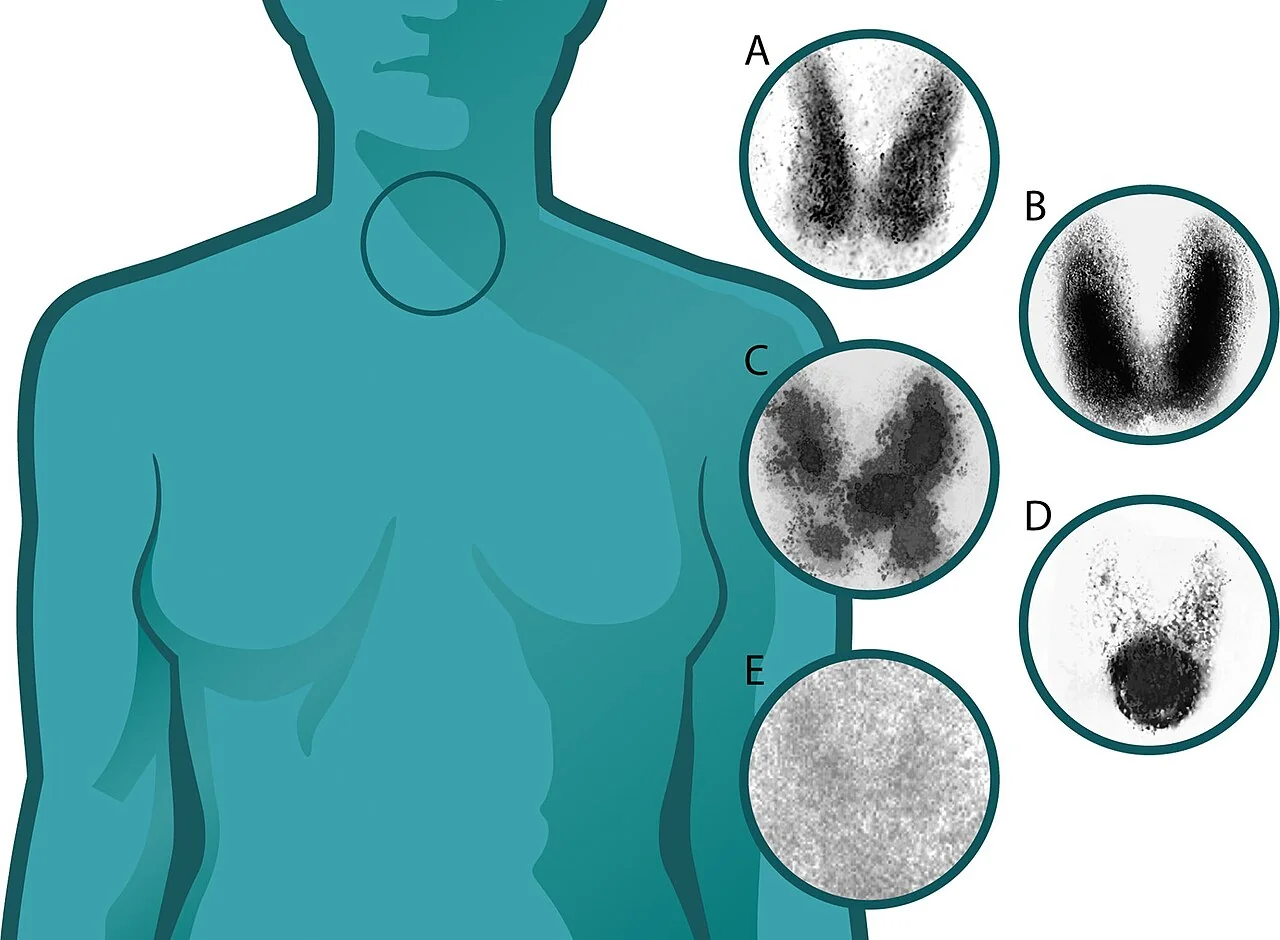
- The uptake scan decides the mechanism: high uptake means the gland is overproducing; low or absent uptake means hormone is leaking from a damaged gland or coming from outside the body.
- Biochemistry: suppressed TSH with a raised free T4 or T3. A raised T3 with a normal T4 is T3 toxicosis; a low TSH with normal hormones is subclinical hyperthyroidism.
- Symptom control: propranolol, which also inhibits peripheral conversion of T4 to T3. Use a rate-limiting calcium channel blocker if beta-blockade is contraindicated.
- Carbimazole: first-line antithyroid drug. Warn every patient about agranulocytosis - a sore throat or fever means an urgent full blood count and stopping the drug.
- Propylthiouracil: reserved for the first trimester of pregnancy and for thyroid storm, because it carries a risk of severe hepatotoxicity.
- Thyroid storm: fever, tachycardia, agitation and multi-organ decompensation. Give the thionamide before iodine, or the iodine simply supplies more substrate.
Introduction
Thyrotoxicosis is the clinical and biochemical syndrome resulting from excess circulating thyroid hormone. Hyperthyroidism is the subset in which the thyroid gland itself is overproducing hormone. The distinction is not pedantry: thyrotoxicosis caused by a destructive thyroiditis or by exogenous thyroxine will not respond to antithyroid drugs, because there is no excess synthesis to block.
Thyrotoxicosis affects around 2% of women and 0.2% of men, and is around ten times more common in women overall.
| Mechanism | Causes |
|---|---|
| High uptake - the gland is overproducing | Graves' disease (around 70%), toxic multinodular goitre (Plummer's disease, typically in older patients with a long-standing goitre), toxic adenoma (a single autonomous hot nodule), and rarely a TSH-secreting pituitary adenoma or hCG-mediated thyrotoxicosis in hyperemesis gravidarum, molar pregnancy and choriocarcinoma |
| Low uptake - hormone is leaking or exogenous | Subacute (de Quervain's) thyroiditis - painful, post-viral, with a raised ESR; postpartum thyroiditis; silent (painless) thyroiditis; amiodarone-induced type 2; drug-induced including immune checkpoint inhibitors; exogenous levothyroxine whether iatrogenic or surreptitious (thyrotoxicosis factitia); iodine-induced (Jod-Basedow) from contrast or amiodarone; and struma ovarii, an ovarian teratoma containing thyroid tissue |
Clinical features
Symptoms
- Weight loss despite an increased appetite - a highly suggestive combination
- Heat intolerance and excessive sweating
- Palpitations
- Anxiety, irritability, restlessness and emotional lability
- Tremor
- Insomnia and fatigue - patients are exhausted but unable to rest
- Diarrhoea or increased bowel frequency
- Oligomenorrhoea or amenorrhoea, and reduced libido
- Proximal muscle weakness - difficulty rising from a chair or climbing stairs
- Itch and thinning hair
Signs
- Tachycardia, and atrial fibrillation in around 10 to 15%, rising steeply with age
- Fine tremor of the outstretched hands
- Warm, moist skin and palmar erythema
- Lid retraction and lid lag - caused by sympathetic overactivity of the levator palpebrae and occurring in thyrotoxicosis of any cause. Distinguish these from proptosis, which is specific to Graves' orbitopathy.
- Goitre - diffuse and smooth with a bruit in Graves', nodular in toxic multinodular goitre, solitary in toxic adenoma, and tender in subacute thyroiditis
- Proximal myopathy and brisk reflexes
- Onycholysis (Plummer's nails) - separation of the nail from the nail bed
- Signs specific to Graves' disease - proptosis, ophthalmoplegia, pretibial myxoedema and thyroid acropachy. Their presence makes the diagnosis without further testing.
Investigations
| TSH | Free T4 | Free T3 | Interpretation |
|---|---|---|---|
| Low | High | High | Overt hyperthyroidism |
| Low | Normal | High | T3 toxicosis - occurs in around 5%, particularly with toxic nodules, and is missed if only T4 is measured |
| Low | Normal | Normal | Subclinical hyperthyroidism |
| High or normal | High | High | TSH-secreting pituitary adenoma or thyroid hormone resistance - rare; refer |
Determining the cause
- TSH receptor antibodies (TRAb) - positive in around 95% of Graves' disease and effectively diagnostic. NICE recommends measuring TRAb to confirm Graves' rather than proceeding straight to imaging in most patients.1
- Anti-TPO antibodies - positive in Graves' and in Hashimoto's, so less discriminating
- Technetium or radioiodine uptake scan - where TRAb is negative or the picture is unclear. It separates the high-uptake causes from thyroiditis and exogenous hormone (see figure above).
- Thyroid ultrasound - for nodules and to assess vascularity, which helps distinguish type 1 from type 2 amiodarone-induced thyrotoxicosis
- ESR and CRP - markedly raised in subacute thyroiditis, which is also painful
- Thyroglobulin - low or suppressed in exogenous thyrotoxicosis, and raised in thyroiditis. This is how factitious thyrotoxicosis is detected.
Other tests
- ECG - for atrial fibrillation
- Full blood count - a baseline before starting a thionamide is essential, as is a baseline for comparison if agranulocytosis is later suspected
- Liver function tests - deranged in thyrotoxicosis itself, and a necessary baseline before antithyroid drugs
- Bone profile - calcium and alkaline phosphatase are often raised from increased bone turnover
- Glucose, since thyrotoxicosis worsens glycaemic control
- Pregnancy test in women of childbearing age - it changes drug choice entirely
Management
Symptom control
- Propranolol - typically 40 mg three times daily, or a longer-acting alternative. It controls tremor, palpitations, anxiety and sweating within days, and additionally inhibits peripheral conversion of T4 to T3.
- Diltiazem or verapamil where beta-blockade is contraindicated, most commonly in asthma
- Continue until the patient is biochemically euthyroid, then withdraw
Antithyroid drugs (thionamides)
These inhibit thyroid peroxidase and therefore hormone synthesis. They take 4 to 6 weeks to produce clinical improvement, because the gland's existing hormone stores must be depleted first - which is why a beta-blocker is given alongside.
- Carbimazole is first line in the UK, given as either a titration (dose-reduction) regimen or a block-and-replace regimen in which a fixed high dose is combined with levothyroxine
- Propylthiouracil is reserved for the first trimester of pregnancy, for thyroid storm, and where carbimazole cannot be used - because it carries a risk of severe hepatotoxicity and acute liver failure
- Duration in Graves' disease is typically 12 to 18 months, after which the drug is stopped and the patient monitored. Around half relapse, most within the first year.
- Toxic nodular disease does not remit - a drug course will control it but will not cure it, so definitive treatment with radioiodine or surgery is required
Definitive treatment
| Radioactive iodine (I-131) | Total thyroidectomy | |
|---|---|---|
| Role | NICE recommends it as first-line definitive treatment for Graves' disease unless contraindicated, and it is also used for toxic nodular disease | Where radioiodine is unsuitable or declined |
| Advantages | Simple, effective, avoids surgery | Immediate and definitive; removes a large goitre; provides tissue if malignancy is suspected |
| Contraindications | Pregnancy and breastfeeding; active moderate to severe thyroid eye disease, which it can worsen (steroid cover is used if it must be given); inability to comply with radiation precautions | Standard surgical and anaesthetic contraindications |
| Specific indications for surgery | - | Large goitre with compressive symptoms, suspected or proven malignancy, severe thyroid eye disease, pregnancy where drug treatment has failed, or patient preference |
| Practical points | Avoid close contact with children and pregnant women for a defined period; avoid pregnancy for 6 months (men and women); hypothyroidism is expected and is a planned outcome rather than a complication | Render euthyroid before operating with carbimazole, with potassium iodide (Lugol's iodine) given for 10 days beforehand to reduce gland vascularity |
| Complications | Hypothyroidism, transient worsening of thyrotoxicosis, worsening eye disease | Recurrent laryngeal nerve palsy causing hoarseness, hypoparathyroidism with hypocalcaemia, postoperative haematoma - an airway emergency requiring immediate wound opening at the bedside, and permanent hypothyroidism |
Cause-specific management
- Thyroiditis (low uptake) - antithyroid drugs have no role. Treat symptomatically with a beta-blocker, and NSAIDs or corticosteroids for the pain of subacute thyroiditis. Expect a thyrotoxic phase, then a hypothyroid phase, then usually recovery - and monitor rather than treating each swing.
- Amiodarone-induced thyrotoxicosis - type 1 occurs in an abnormal gland from iodine excess, shows increased vascularity on Doppler and responds to carbimazole, sometimes with potassium perchlorate; type 2 is a destructive thyroiditis with absent vascularity and responds to corticosteroids. Mixed pictures are common, and management should be joint with endocrinology and cardiology. Whether to stop the amiodarone depends on the cardiac indication and it has a half-life of many weeks.
- Subclinical hyperthyroidism - consider treating if TSH is persistently below 0.1 mU/L on two occasions 3 months apart, particularly in those over 65, or with atrial fibrillation, osteoporosis or cardiac disease, because of the risk of fracture and arrhythmia
- Pregnancy - distinguish gestational thyrotoxicosis (hCG-mediated, associated with hyperemesis, self-limiting, no TRAb) from Graves' disease. Use propylthiouracil in the first trimester and switch to carbimazole thereafter, at the lowest effective dose. TRAb crosses the placenta and can cause fetal and neonatal thyrotoxicosis, so measure it and involve fetal medicine.
Thyroid storm
A rare, life-threatening decompensation of thyrotoxicosis with a mortality of 10 to 30%. It is a clinical diagnosis - the thyroid hormone levels are no higher than in uncomplicated thyrotoxicosis, and waiting for them delays treatment.
Complications
- Atrial fibrillation - occurring in 10 to 15%, with associated thromboembolic risk. It frequently reverts to sinus rhythm once the patient is euthyroid, so anticoagulation and rhythm decisions should account for that.
- Heart failure - high-output failure, and thyrotoxic cardiomyopathy
- Osteoporosis and fragility fracture - from accelerated bone turnover, and a particular concern in postmenopausal women and in subclinical disease
- Thyroid storm
- Thyroid eye disease - specific to Graves', and covered separately
- Thyrotoxic periodic paralysis - episodic profound hypokalaemic weakness, classically in young men of East Asian descent, precipitated by carbohydrate loads and exercise. Treat the thyrotoxicosis and replace potassium cautiously, as rebound hyperkalaemia can occur.
- Proximal myopathy
- Subfertility, miscarriage, pre-eclampsia and preterm birth
- Anxiety, psychosis and cognitive impairment
- Treatment complications - agranulocytosis and hepatotoxicity from thionamides, permanent hypothyroidism after radioiodine or surgery, and recurrent laryngeal nerve or parathyroid injury after thyroidectomy
Red flags
Prognosis
Outcome depends heavily on the cause. Thyroiditis is self-limiting in most cases - the thyrotoxic phase lasts weeks, is followed by a hypothyroid phase, and the majority recover normal function, although around a quarter of women with postpartum thyroiditis develop permanent hypothyroidism.
Graves' disease remits after a 12 to 18 month course of antithyroid drugs in around half of patients, with relapse most likely in the first year. Predictors of relapse include a large goitre, high initial T4 and T3 levels, persistently high TRAb titres, young age and smoking. Definitive treatment with radioiodine or surgery is highly effective, at the near-certain cost of lifelong levothyroxine - which is a trade most patients accept readily once it is framed as exchanging an unpredictable disease for a predictable tablet.
Toxic nodular disease does not remit spontaneously and requires definitive treatment.
Two points deserve emphasis. Untreated thyrotoxicosis carries real cardiovascular and skeletal cost - atrial fibrillation, thromboembolism, heart failure and fragility fracture - and this applies to persistent subclinical disease in older people too, which is why a suppressed TSH should not simply be observed indefinitely. And smoking cessation matters specifically here: smoking increases the risk of relapse after drug treatment and is the strongest modifiable risk factor for thyroid eye disease, making it one of the few interventions that alters the natural history of the condition.
References
- NICE NG145. Thyroid disease: assessment and management. 2019, updated 2023. Available here
- NICE Clinical Knowledge Summaries. Hyperthyroidism. Available here
- British Thyroid Association. Current guidelines and statements. Available here
- MHRA Drug Safety Update. Carbimazole: increased risk of congenital malformations and risk of acute pancreatitis. Available here
- Ross DS, Burch HB, Cooper DS et al. American Thyroid Association guidelines for diagnosis and management of hyperthyroidism and other causes of thyrotoxicosis. Thyroid. 2016. Available here
- Burch HB, Wartofsky L. Life-threatening thyrotoxicosis: thyroid storm. Endocrinology and Metabolism Clinics of North America. 1993. Available here
- BNF. Carbimazole, propylthiouracil and propranolol. Available here
- Petros Perros, PLoS Medicine, CC BY-SA 3.0, via Wikimedia Commons. Available here
This article is written for revision and education. It is not clinical guidance and must not be used to make decisions about the care of a patient. Always check current NICE guidance and local protocols.