
Type 1 Diabetes: Absolute Insulin Deficiency and Its Replacement
Key points
- Type 1 diabetes: autoimmune T-cell mediated destruction of pancreatic beta cells causing absolute insulin deficiency and lifelong dependence on exogenous insulin.
- Presentation: a short history of weeks - polyuria, polydipsia, weight loss and fatigue - and around a quarter present in diabetic ketoacidosis.
- Diagnose it clinically: in an adult with hyperglycaemia plus ketosis, rapid weight loss, age under 50 or BMI under 25. Do not wait for antibodies, and do not rely on HbA1c.
- Diagnostic thresholds: fasting glucose 7.0 mmol/L or above, random or 2-hour OGTT glucose 11.1 mmol/L or above, or HbA1c 48 mmol/mol or above. One result suffices if symptomatic, two if not.
- Insulin regimen: multiple daily injections in a basal-bolus pattern is first line, with carbohydrate counting and structured education such as DAFNE.
- Technology: continuous glucose monitoring is offered to every adult with type 1 diabetes, and hybrid closed loop systems are now recommended far more widely.
- Targets: HbA1c 48 mmol/mol or below, with a time in range of 3.9 to 10 mmol/L for more than 70% of the day.
- Never stop insulin: during illness, however little the patient is eating. Stopping insulin when unwell is the commonest precipitant of DKA.
Introduction
Type 1 diabetes is a chronic condition in which autoimmune destruction of the pancreatic beta cells leads to absolute insulin deficiency. Around 400,000 people in the UK have it, accounting for roughly 8% of all diabetes, and the UK has one of the highest incidences in the world.3
Two features distinguish it from type 2 diabetes and drive everything that follows. First, the deficiency is absolute, so insulin is not one treatment option among several - it is essential for survival, and withdrawing it produces ketoacidosis within hours. Second, onset is typically rapid, over weeks rather than years, which is why the presentation is acute and why a slow-moving diagnostic pathway is inappropriate.
Peak incidence is between 10 and 14 years, but the common teaching that it is a childhood disease is misleading: roughly half of new cases occur in adults, and adult-onset type 1 diabetes is frequently misdiagnosed as type 2, with potentially fatal consequences.
Pathophysiology
- Genetic susceptibility - strongly associated with HLA-DR3-DQ2 and HLA-DR4-DQ8, which together account for around half the genetic risk. Concordance in identical twins is only about 50%, so genes alone are not sufficient.
- An environmental trigger - the candidates include enteroviral infection (particularly coxsackie B), congenital rubella, early exposure to cow's milk protein, vitamin D deficiency and the gut microbiome. None is proven.
- Autoimmune destruction - a T-cell mediated attack on beta cells produces insulitis, an inflammatory infiltrate of the islets of Langerhans. Autoantibodies appear months to years before symptoms and are markers rather than the cause.
- Clinical presentation - occurs only once around 80 to 90% of beta cell mass has been destroyed, which is why the onset seems abrupt despite a long preclinical phase
The consequences of absolute insulin deficiency follow directly from insulin's normal actions. Without it, hepatic gluconeogenesis and glycogenolysis run unopposed and peripheral glucose uptake fails, so plasma glucose rises. Once it exceeds the renal threshold of about 10 mmol/L, glucose is lost in the urine, dragging water with it by osmotic diuresis - hence polyuria, and then thirst. Unrestrained lipolysis releases free fatty acids which the liver converts to ketone bodies, producing weight loss and, if unchecked, ketoacidosis.
Clinical features
Symptoms
- Polyuria and nocturia - from osmotic diuresis. In children, new bedwetting in a previously dry child is a classic and frequently missed presentation.
- Polydipsia - intense thirst
- Weight loss - often several kilograms over weeks, despite a normal or increased appetite
- Fatigue and lethargy
- Blurred vision - from osmotic changes in the lens
- Recurrent infections - particularly candidal balanitis and vulvovaginitis, and skin infections
- Symptoms of DKA - vomiting, abdominal pain, deep sighing breathing and drowsiness. Around 25% of children and a substantial proportion of adults present in established DKA.
Examination
- Often unremarkable in early disease, other than recent weight loss
- Signs of dehydration - dry mucous membranes, reduced skin turgor, tachycardia and hypotension
- Kussmaul respiration and ketotic breath if in DKA
- Reduced conscious level in severe DKA
- Signs of associated autoimmune disease - goitre, vitiligo, alopecia areata
- Lipohypertrophy at injection sites in established disease - always ask to see and palpate the injection sites, since injecting into lipohypertrophic tissue causes erratic absorption and unexplained variability
Diagnosis
Confirming diabetes
| Test | Diagnostic value |
|---|---|
| Fasting plasma glucose | 7.0 mmol/L or above |
| Random plasma glucose | 11.1 mmol/L or above |
| 2-hour glucose on 75 g OGTT | 11.1 mmol/L or above |
| HbA1c | 48 mmol/mol (6.5%) or above |
In a symptomatic patient, one abnormal result is sufficient. In an asymptomatic patient, the abnormality must be confirmed on a second occasion, preferably with the same test.
Distinguishing type 1 from type 2
NICE is explicit that in adults, type 1 diabetes is diagnosed on clinical grounds rather than by laboratory test.1 Suspect it in a patient with hyperglycaemia and any of:
- Ketosis or ketoacidosis
- Rapid weight loss
- Age under 50 at onset
- BMI under 25
- A personal or family history of autoimmune disease
Do not assume type 2 diabetes simply because an adult is overweight, and do not rule out type 1 because of age. Where the picture is genuinely unclear, measure C-peptide and diabetes autoantibodies, but treat with insulin in the meantime.
Other conditions to consider
- Latent autoimmune diabetes in adults (LADA) - a slowly progressive autoimmune diabetes presenting in adults over 30, often initially controlled on oral agents but progressing to insulin dependence within a few years. Suspect it in a lean adult with a poor response to metformin, and check anti-GAD.
- Maturity-onset diabetes of the young (MODY) - autosomal dominant, presenting under 25, with a strong family history across three generations, absent autoantibodies, preserved C-peptide and no obesity. HNF1A MODY responds dramatically to low-dose sulfonylureas, and glucokinase MODY needs no treatment at all, so genetic testing genuinely changes management.
- Secondary diabetes - pancreatitis, cystic fibrosis, haemochromatosis, pancreatic cancer, Cushing syndrome, acromegaly, and drugs including corticosteroids, thiazides, antipsychotics and tacrolimus
At diagnosis, also check
- Coeliac serology (tissue transglutaminase IgA with total IgA) - coeliac disease affects around 5% of people with type 1 diabetes and should be tested at diagnosis
- Thyroid function and thyroid peroxidase antibodies - autoimmune thyroid disease is common and should be checked at diagnosis and annually
- Consider Addison's disease and pernicious anaemia where the clinical picture suggests them - unexplained recurrent hypoglycaemia and falling insulin requirements are the classic clue to adrenal insufficiency
Insulin therapy
The aim is to reproduce physiological insulin secretion: a continuous low background level covering hepatic glucose output between meals and overnight, and sharp peaks with meals matched to carbohydrate intake.
| Type | Examples | Onset | Duration | Role |
|---|---|---|---|---|
| Rapid-acting analogue | Insulin aspart, lispro, glulisine, faster aspart | 10-20 min | 3-5 h | Mealtime (bolus) - injected just before eating |
| Short-acting (soluble human) | Actrapid, Humulin S | 30-60 min | 6-8 h | Mealtime, given 20-30 min before eating; also used intravenously in DKA |
| Intermediate-acting (isophane, NPH) | Insulatard, Humulin I | 1-2 h | 12-16 h | Basal, usually twice daily |
| Long-acting analogue | Glargine, detemir | 1-2 h | 18-24 h | Basal - once or twice daily |
| Ultra-long-acting analogue | Degludec | 1-2 h | Over 42 h | Basal, once daily with flexible timing |
| Biphasic (mixed) | NovoMix 30, Humalog Mix25 | Varies | Varies | Twice daily regimens, less flexible - not first line in type 1 diabetes |
The recommended regimen
- Multiple daily injections (MDI) in a basal-bolus pattern is first line for adults with type 1 diabetes.1 NICE specifically recommends twice-daily insulin detemir as the basal component, with once-daily glargine or degludec as alternatives where twice-daily injection is not acceptable.
- A rapid-acting analogue before each meal, with the dose calculated from carbohydrate content, the current glucose and planned activity
- Carbohydrate counting with an insulin-to-carbohydrate ratio and a correction factor, taught through a structured education programme such as DAFNE offered within 6 to 12 months of diagnosis
- Twice-daily mixed insulin is not recommended as first-line treatment for type 1 diabetes, because it cannot separate basal from prandial dosing and forces the patient to eat to fit the insulin
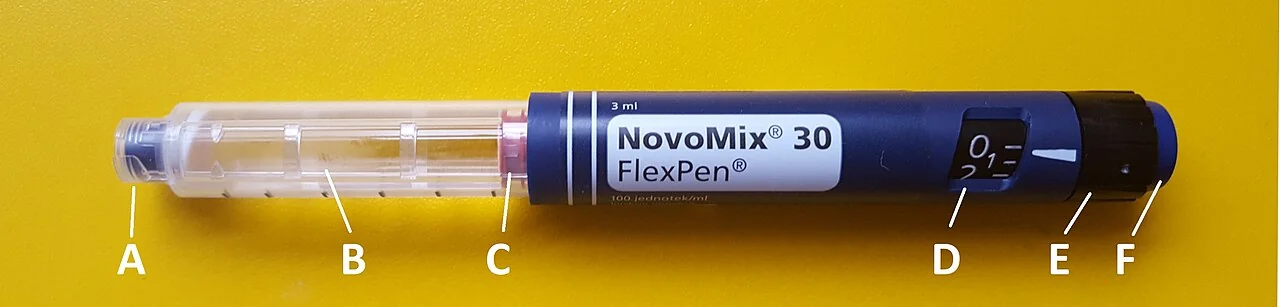
Practical points
- Rotate injection sites systematically - abdomen, thighs, buttocks and upper arms. Repeated injection into one area causes lipohypertrophy, which absorbs insulin erratically and is a common hidden cause of unexplained glycaemic variability. Examine the sites at every annual review.
- Absorption is fastest from the abdomen, then arms, then thighs and buttocks, and is accelerated by exercise, heat and massage
- The honeymoon period - a phase of partial remission with low insulin requirements in the months after diagnosis as residual beta cells recover. Warn patients it is temporary, or they will believe the diabetes has resolved.
- Never stop long-acting insulin, including when nil by mouth or unwell
- Insulin prescribing errors are a recognised source of serious harm - always write units in full rather than abbreviating, never withdraw insulin from a pen device with a syringe, and use an insulin syringe rather than a standard one
Monitoring and technology
Glucose monitoring
- Continuous glucose monitoring should be offered to all adults with type 1 diabetes - either real-time CGM or intermittently scanned (flash) monitoring, according to preference.1 This was a substantial change in NICE guidance and is now standard care rather than a specialist extra.
- Capillary glucose testing at least 4 times a day for those not using CGM, including before each meal and before bed, and more often during illness, before driving and around exercise
- Blood ketone testing should be available to every patient with type 1 diabetes, with education on when to use it
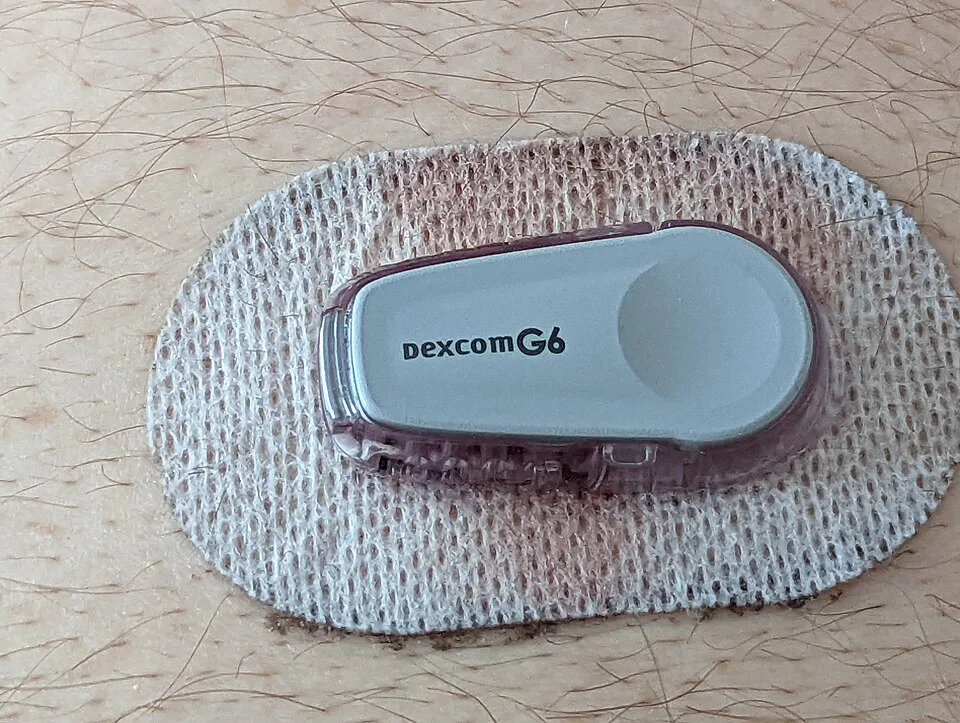
| Measure | Target |
|---|---|
| HbA1c | 48 mmol/mol (6.5%) or below, individualised to avoid disabling hypoglycaemia |
| Fasting on waking | 5 to 7 mmol/L |
| Before meals at other times | 4 to 7 mmol/L |
| At least 90 minutes after eating | 5 to 9 mmol/L |
| Before driving | At least 5 mmol/L |
| Time in range (3.9 to 10 mmol/L) | More than 70% of readings |
| Time below range (under 3.9 mmol/L) | Less than 4%, with under 1% below 3 mmol/L |
Insulin pumps and closed-loop systems
- Continuous subcutaneous insulin infusion (CSII, insulin pump) - delivers rapid-acting insulin continuously with mealtime boluses. Recommended where HbA1c remains 69 mmol/mol or above despite a genuine attempt at multiple daily injections, or where disabling hypoglycaemia persists.2
- Hybrid closed loop (the artificial pancreas) - a CGM and pump communicating through an algorithm that automatically adjusts basal insulin, with the patient still entering meal carbohydrate. NICE now recommends it for adults with HbA1c 58 mmol/mol or above or disabling hypoglycaemia despite best management, and for all children and young people and all women planning or during pregnancy.4
- Risks of pump therapy - because there is no long-acting insulin depot, a pump failure or cannula blockage causes ketosis within a few hours. Every pump user must carry backup pen insulin and know how to use it.
Wider management
Annual review
- HbA1c every 3 to 6 months
- Blood pressure - target below 135/85 mmHg, or below 130/80 mmHg if there is albuminuria or metabolic syndrome
- Lipids and cardiovascular risk - offer atorvastatin 20 mg to those over 40, with diabetes for more than 10 years, with nephropathy, or with other cardiovascular risk factors
- Kidneys - annual urinary albumin-to-creatinine ratio and eGFR, starting from diagnosis in adults. An ACE inhibitor or ARB is started if the ACR is raised, whatever the blood pressure.
- Eyes - annual digital retinal screening from diagnosis in those aged 12 and over
- Feet - annual foot check for neuropathy, pulses, deformity and ulceration, with risk stratification
- Thyroid function annually, and coeliac serology if symptoms develop
- Injection sites, technique and equipment
- Psychological wellbeing - screen for depression, anxiety, diabetes distress and disordered eating
- Smoking cessation, alcohol advice and immunisations including annual influenza and pneumococcal vaccination
Sick day rules
Driving
- Anyone treated with insulin must inform the DVLA
- Check glucose no more than 2 hours before driving and every 2 hours on a long journey
- Glucose must be above 5 mmol/L to drive - the mnemonic is 5 to drive. Between 4 and 5, eat carbohydrate before setting off; below 4, do not drive.
- If hypoglycaemia occurs while driving, stop as soon as safely possible, remove the keys, leave the driver's seat, and do not drive again for 45 minutes after glucose has returned to normal
- Two or more episodes of severe hypoglycaemia (requiring the assistance of another person) within 12 months means the licence is revoked, as does impaired awareness of hypoglycaemia
- Always carry glucose meter, test strips and fast-acting carbohydrate in the vehicle
- Group 2 (lorry and bus) licences have considerably stricter requirements, including CGM or 3-monthly glucose records
Exercise, alcohol and pregnancy
- Exercise increases insulin sensitivity and can cause hypoglycaemia during activity and for up to 24 hours afterwards. Reduce prandial insulin beforehand, take extra carbohydrate, and check glucose before, during and after.
- Alcohol inhibits gluconeogenesis and causes delayed hypoglycaemia several hours later, often overnight. Advise eating carbohydrate with alcohol, checking glucose before bed, and reminding companions that intoxication and hypoglycaemia look identical.
- Pregnancy - aim for HbA1c below 48 mmol/mol before conception, take 5 mg folic acid daily from preconception until 12 weeks, and manage in a joint diabetes-antenatal clinic. Insulin requirements fall in the first trimester, rise substantially in the second and third, and fall abruptly after delivery.
- Screen for retinopathy and nephropathy before and during pregnancy, since both can deteriorate rapidly
Complications
Acute
- Diabetic ketoacidosis - the medical emergency defining absolute insulin deficiency
- Hypoglycaemia - the limiting factor in achieving tight control, and the source of most treatment-related anxiety
- Impaired awareness of hypoglycaemia - recurrent hypoglycaemia blunts the counter-regulatory warning symptoms, creating a dangerous cycle. Assess formally with the Gold or Clarke score, and treat by deliberately relaxing targets for several weeks to restore awareness.
Microvascular
- Retinopathy - the commonest cause of blindness in working-age adults in the UK. Background, pre-proliferative and proliferative stages, plus maculopathy.
- Nephropathy - progressing from microalbuminuria through proteinuria to declining eGFR and end-stage renal disease
- Neuropathy - distal symmetrical sensory polyneuropathy, autonomic neuropathy and mononeuropathies
Macrovascular and other
- Ischaemic heart disease, stroke and peripheral arterial disease - the leading causes of death
- Diabetic foot disease - ulceration, infection, Charcot neuroarthropathy and amputation
- Lipohypertrophy and lipoatrophy at injection sites
- Associated autoimmune disease - thyroid, coeliac, Addison's, pernicious anaemia and vitiligo
- Psychological - depression and anxiety are roughly twice as common as in the general population, and disordered eating with deliberate insulin omission for weight control occurs in a significant minority, carries a very high complication rate and is easily missed unless asked about directly
- Necrobiosis lipoidica and granuloma annulare - skin conditions associated with type 1 diabetes
Red flags
Prognosis
Life expectancy in type 1 diabetes remains reduced compared with the general population, though the gap has narrowed considerably and continues to do so. Cardiovascular disease is the leading cause of death, followed by acute metabolic complications and renal disease.
The strongest evidence for the value of tight control comes from the DCCT trial and its EDIC follow-up. Intensive insulin therapy reduced the development and progression of retinopathy, nephropathy and neuropathy by roughly 50 to 75%, and long-term follow-up showed the benefit persisted for decades after the trial ended even once glycaemic control converged between the groups - the phenomenon known as metabolic memory or the legacy effect.5 The practical implication is that control achieved early matters disproportionately, which is a genuinely motivating message for a newly diagnosed patient.
Prognosis is worsened by persistently high HbA1c, smoking, hypertension, dyslipidaemia, albuminuria and recurrent DKA. It is improved by early tight control, blood pressure and lipid management, structured education, and access to CGM and closed-loop technology - which have measurably improved both HbA1c and time in range while reducing hypoglycaemia, an improvement previous generations of treatment could not deliver simultaneously.
Finally, the burden of the condition is easy to underestimate. A person with type 1 diabetes makes an estimated 180 additional decisions a day about food, activity and insulin, with no days off. Acknowledging that, screening for diabetes distress, and being careful about language - people with diabetes are not "non-compliant" or "poorly controlled" - are a genuine part of good care rather than a courtesy.
References
- NICE NG17. Type 1 diabetes in adults: diagnosis and management. 2015, updated 2022. Available here
- NICE TA151. Continuous subcutaneous insulin infusion for the treatment of diabetes mellitus. 2008. Available here
- Diabetes UK. Diabetes statistics and facts. Available here
- NICE TA943. Hybrid closed loop systems for managing blood glucose levels in type 1 diabetes. 2023. Available here
- Diabetes Control and Complications Trial / EDIC Research Group. Effect of intensive diabetes therapy on the progression of diabetic complications. NEJM. Available here
- NICE NG18. Diabetes (type 1 and type 2) in children and young people: diagnosis and management. 2015, updated 2023. Available here
- DVLA. Assessing fitness to drive: a guide for medical professionals - diabetes. Available here
- Joint British Diabetes Societies. Inpatient care and the management of diabetic ketoacidosis in adults. Available here
- BNF. Insulin - preparations, dosing and safety. Available here
- Wesalius, labelled by Berchanhimez, CC BY 4.0, via Wikimedia Commons. Available here
- Geo Swan, CC0, via Wikimedia Commons. Available here
This article is written for revision and education. It is not clinical guidance and must not be used to make decisions about the care of a patient. Always check current NICE guidance and local protocols.