
Systemic Anti-Cancer Therapy and its Toxicity
Key points
- SACT: systemic anti-cancer therapy - the umbrella term covering cytotoxic chemotherapy, endocrine therapy, targeted agents and immunotherapy.
- Why combinations: drugs with different mechanisms and non-overlapping toxicities are combined to maximise cell kill while limiting damage to any one organ, and to delay resistance.
- Nadir: the neutrophil count falls to its lowest around 7 to 14 days after a cycle - this is when neutropenic sepsis occurs.
- Neutropenic sepsis: fever in anyone within 6 weeks of chemotherapy is neutropenic sepsis until proven otherwise; antibiotics within one hour, before the blood count returns.
- Signature toxicities: anthracyclines cause cardiomyopathy, bleomycin pulmonary fibrosis, cisplatin nephrotoxicity and ototoxicity, vincristine neuropathy, and cyclophosphamide haemorrhagic cystitis.
- Immunotherapy: checkpoint inhibitors cause autoimmune toxicity in any organ - colitis, hepatitis, pneumonitis, thyroiditis - treated with corticosteroids, not with antidiarrhoeals or antibiotics.
- Fertility: must be discussed and preservation offered before the first dose, since many regimens cause permanent infertility.
- Never events: intrathecal vincristine is fatal and is a national never event; oral methotrexate given daily instead of weekly is another.
Introduction
Systemic anti-cancer therapy (SACT) is the NHS umbrella term for any drug treatment given for cancer: traditional cytotoxic chemotherapy, endocrine (hormonal) therapy, targeted small molecules and monoclonal antibodies, and immunotherapy. The term matters because the governance around all of these is the same - specialist prescribing, mandatory checks, a 24-hour helpline and an alert card - even though the drugs behave very differently.
You are not expected to prescribe SACT as a foundation doctor. You are expected to recognise its complications, because these patients present to emergency departments, acute medical units and general practice far more often than they present to an oncology ward. The single most important habit to develop is asking every unwell patient whether they have had chemotherapy in the last six weeks, and treating a fever in that group as an emergency.1
The other examinable theme is that each drug class has a signature toxicity that follows logically from its mechanism. Learning the mechanism gives you the toxicity, the monitoring required, and the counselling points, all at once - which is far more efficient than memorising side effect lists.
Principles of cytotoxic chemotherapy
Cytotoxic drugs act on rapidly dividing cells by damaging DNA or disrupting mitosis. They are not selective for cancer, which is precisely why their toxicity falls on the other rapidly dividing tissues of the body: bone marrow, gastrointestinal mucosa, hair follicles and gonads. Almost every classical chemotherapy side effect can be predicted from that one sentence.
- Log kill hypothesis - each cycle kills a constant fraction of tumour cells rather than a constant number, which is why repeated cycles are needed and why treatment continues after the tumour is no longer visible
- Cycles and nadir - treatment is given in cycles, usually every 21 days, allowing normal marrow to recover between doses. Tumour cells recover more slowly than marrow, which is the therapeutic window.
- Combination therapy - drugs are combined when they have different mechanisms of action, non-overlapping dose-limiting toxicities, and proven single-agent activity. This maximises kill without multiplying damage to a single organ, and reduces the emergence of resistance.
- Dosing - most cytotoxics are dosed by body surface area calculated from height and weight. Carboplatin is the exception, dosed by target AUC using the Calvert formula, which incorporates the glomerular filtration rate.
- Resistance - arises through drug efflux pumps, altered drug targets, enhanced DNA repair and defective apoptosis, and is the reason most metastatic cancers eventually progress
Drug classes and their signature toxicities
Alkylating agents and platinums
These cross-link DNA strands, preventing replication. They act at any point in the cell cycle (cell cycle non-specific).
| Drug | Typical use | Signature toxicity |
|---|---|---|
| Cyclophosphamide | Breast cancer, lymphoma, vasculitis | Haemorrhagic cystitis from the metabolite acrolein - prevented by hydration and mesna. Also transitional cell carcinoma of the bladder as a late effect, and infertility. |
| Ifosfamide | Sarcoma, germ cell tumours | Haemorrhagic cystitis, and a characteristic encephalopathy treated with methylene blue |
| Cisplatin | Testicular, lung, head and neck, bladder cancer | Nephrotoxicity (needs vigorous pre- and post-hydration), ototoxicity with high-frequency hearing loss, peripheral neuropathy, and severe emetogenicity |
| Carboplatin | Ovarian, lung cancer; where cisplatin is too toxic | Myelosuppression, particularly thrombocytopenia. Much less nephrotoxic and emetogenic than cisplatin. |
| Oxaliplatin | Colorectal cancer | Cold-induced peripheral neuropathy - patients must avoid cold drinks and cold air for days after infusion; also a cumulative sensory neuropathy |
| Busulfan, chlorambucil, melphalan | Conditioning for transplant, myeloma, CLL | Prolonged myelosuppression, pulmonary fibrosis with busulfan, secondary leukaemia |
Antimetabolites
These masquerade as nucleotides or block the enzymes that make them, so they act during S phase. Mucositis and diarrhoea are prominent because the gut epithelium turns over fast.
- Methotrexate - a dihydrofolate reductase inhibitor. Causes mucositis, myelosuppression, hepatotoxicity and pneumonitis. Folinic acid rescue limits toxicity after high-dose regimens. It is renally excreted, so NSAIDs, trimethoprim, penicillins and impaired renal function all raise levels dangerously.
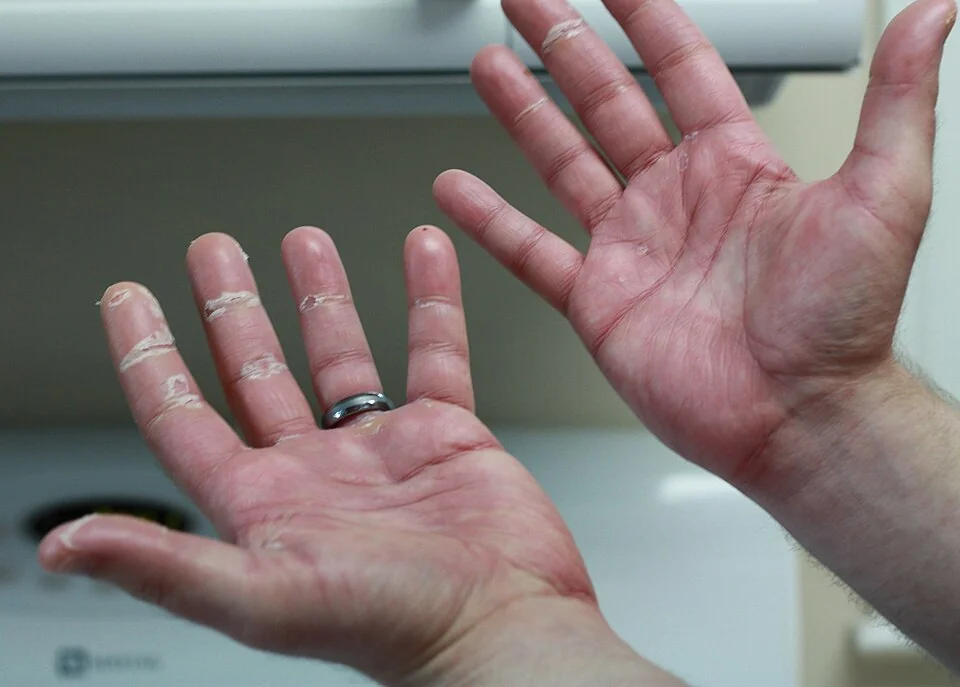
- 5-Fluorouracil (5-FU) and capecitabine - thymidylate synthase inhibitors, capecitabine being the oral prodrug. Cause mucositis, diarrhoea, myelosuppression, palmar-plantar erythrodysaesthesia and, rarely, coronary vasospasm producing chest pain during infusion. Patients deficient in dihydropyrimidine dehydrogenase (DPD) suffer severe, sometimes fatal toxicity, and DPD testing before the first dose is now mandatory in the UK.
- Gemcitabine - myelosuppression, a flu-like syndrome, and occasionally haemolytic uraemic syndrome
- Cytarabine - central to AML regimens; causes myelosuppression, conjunctivitis (prevented with steroid eye drops) and cerebellar toxicity at high dose
- 6-Mercaptopurine and azathioprine - toxicity is greatly increased in those with low thiopurine methyltransferase (TPMT) activity, which is why TPMT is checked first
Anti-tumour antibiotics
- Doxorubicin, epirubicin and the other anthracyclines - intercalate DNA and inhibit topoisomerase II. The signature toxicity is a dose-dependent, largely irreversible dilated cardiomyopathy, which is why a cumulative dose limit applies and cardiac function is assessed before and during treatment. They are also potent vesicants and cause severe tissue necrosis if extravasated, and they turn the urine red, which should be explained in advance.
- Bleomycin - causes pulmonary fibrosis, dose-related and sometimes progressive after treatment stops. Lung function including transfer factor is monitored, and patients carry a warning that high-inspired oxygen concentrations can precipitate fatal fibrosis, which anaesthetists must be told about before any operation.
- Mitomycin C - myelosuppression and haemolytic uraemic syndrome
Mitotic inhibitors
- Vinca alkaloids (vincristine, vinblastine, vinorelbine) - bind tubulin and prevent spindle formation. Vincristine causes a dose-limiting peripheral neuropathy and autonomic neuropathy with constipation and ileus, but is relatively marrow-sparing; vinblastine is the reverse, causing myelosuppression with less neuropathy. All are vesicants.
- Taxanes (paclitaxel, docetaxel) - stabilise microtubules so the spindle cannot disassemble. Cause peripheral neuropathy, myelosuppression, alopecia and hypersensitivity reactions requiring steroid and antihistamine premedication. Docetaxel additionally causes fluid retention and nail changes.
- Topoisomerase inhibitors - etoposide causes myelosuppression and secondary AML; irinotecan causes two distinct diarrhoeas, an acute cholinergic one during infusion treated with atropine, and a delayed one from day 3 onwards treated with high-dose loperamide
Endocrine therapy
| Drug | Mechanism and use | Key adverse effects |
|---|---|---|
| Tamoxifen | Selective oestrogen receptor modulator; ER-positive breast cancer, chiefly in premenopausal women | Hot flushes, venous thromboembolism, and endometrial hyperplasia and carcinoma - any postmenopausal bleeding needs urgent investigation |
| Anastrozole, letrozole, exemestane | Aromatase inhibitors; ER-positive breast cancer in postmenopausal women only | Arthralgia, hot flushes, vaginal dryness, and osteoporosis - a baseline DEXA scan and bone protection are needed |
| Goserelin, leuprorelin | GnRH agonists causing pituitary downregulation; prostate and premenopausal breast cancer | Tumour flare in the first fortnight, covered by an anti-androgen in prostate cancer; hot flushes, loss of libido, osteoporosis |
| Bicalutamide, enzalutamide | Androgen receptor blockade in prostate cancer | Gynaecomastia, hepatotoxicity; enzalutamide lowers the seizure threshold |
| Abiraterone | CYP17 inhibitor blocking androgen synthesis; prostate cancer | Mineralocorticoid excess with hypertension, hypokalaemia and fluid retention - given with prednisolone |
Targeted therapy
- Trastuzumab - anti-HER2 antibody used in HER2-positive breast and gastric cancer. Causes a cardiomyopathy that is usually reversible on stopping, unlike the anthracycline type; LVEF is measured at baseline and every three months, and the two drug classes are not given concurrently.
- Rituximab - anti-CD20 antibody for B-cell lymphoma and autoimmune disease. Infusion reactions are common with the first dose; hepatitis B reactivation can be fulminant, so serology is checked beforehand. Progressive multifocal leukoencephalopathy is a rare but devastating complication.
- Bevacizumab - anti-VEGF antibody. Causes hypertension, proteinuria, arterial and venous thrombosis, impaired wound healing (so it is stopped several weeks before surgery), and rarely gastrointestinal perforation.
- EGFR tyrosine kinase inhibitors (erlotinib, osimertinib) - used in EGFR-mutant lung cancer. Cause an acneiform rash and diarrhoea; the rash correlates with response and is treated rather than being a reason to stop.
- Imatinib and other BCR-ABL inhibitors - transformed the prognosis of chronic myeloid leukaemia. Cause oedema, myelosuppression, rash and cramps.
- PARP inhibitors (olaparib) - exploit synthetic lethality in BRCA-mutated ovarian and breast cancer; cause anaemia, fatigue and nausea
Immunotherapy
Immune checkpoint inhibitors release the brakes on T cells, allowing them to recognise tumour. Pembrolizumab and nivolumab block PD-1, atezolizumab blocks PD-L1, and ipilimumab blocks CTLA-4. They have transformed outcomes in melanoma, non-small cell lung cancer, renal cancer and several others, producing durable remissions in a minority of patients.
Their toxicity is fundamentally different from chemotherapy: instead of marrow and mucosa, they cause immune-related adverse events (irAEs), which are autoimmune inflammation of any organ, most often the skin, gut, liver, lungs and endocrine glands.5 They can begin weeks to many months after treatment, including after it has stopped.
Acute toxicity: what you will be called about
Toxicity is graded 1 to 5 using the Common Terminology Criteria for Adverse Events (CTCAE), where grade 1 is mild, grade 3 is severe, grade 4 is life-threatening and grade 5 is death. Grade 3 or above generally means admission, treatment interruption and a dose reduction for subsequent cycles.3
Myelosuppression
The neutrophil nadir occurs 7 to 14 days after a cycle, and recovery follows by day 21. Anaemia develops more slowly because red cells live 120 days; thrombocytopenia follows a similar timescale to neutropenia and is the dose-limiting toxicity of carboplatin. G-CSF is used to shorten the neutropenic period in regimens with a high risk of febrile neutropenia, or where dose intensity must be maintained.
Nausea and vomiting
Regimens are classified by emetogenic risk, and prophylaxis is matched to that risk rather than given reactively. Cisplatin is highly emetogenic; carboplatin moderate; most targeted agents low. Prophylaxis combines a 5-HT3 antagonist such as ondansetron, dexamethasone, and for high-risk regimens an NK1 antagonist such as aprepitant.4
- Acute vomiting occurs within 24 hours and is mediated largely by 5-HT3 release from the gut - hence ondansetron
- Delayed vomiting occurs from 24 hours to 5 days, is substance P mediated, and responds better to aprepitant and dexamethasone than to ondansetron
- Anticipatory vomiting is a conditioned response occurring before the next cycle; it is prevented by controlling the first cycle well and treated with a benzodiazepine such as lorazepam
- Constipation from ondansetron is common and compounds vincristine-induced constipation - prescribe a laxative alongside
Mucositis and diarrhoea
Mucositis appears 5 to 10 days after treatment and can be severe enough to prevent eating and drinking; management is analgesia (including topical and occasionally opioids), scrupulous mouth care, antifungal treatment for superadded candida, and nutritional support. Diarrhoea requires assessment of volume status and exclusion of infection including Clostridioides difficile, and remember the irinotecan and immunotherapy patterns described above.
Extravasation
Leakage of a vesicant such as an anthracycline or a vinca alkaloid into the tissues causes progressive necrosis over days. The immediate steps are to stop the infusion but leave the cannula in, aspirate what you can, mark the area, elevate the limb, contact the chemotherapy team, and apply a cold pack for anthracyclines or a warm pack for vinca alkaloids. Dexrazoxane is an antidote for anthracycline extravasation. Plastic surgical review is needed for established necrosis.
Hair loss and skin
Alopecia is drug-specific: near universal with anthracyclines and taxanes, uncommon with platinums and most targeted agents. It is almost always reversible, though hair may return with a different texture or colour. Scalp cooling during infusion reduces the incidence and should be offered where appropriate. Photosensitivity, nail changes and the acneiform rash of EGFR inhibitors are also common enough to warrant counselling.
Late effects
As cure rates rise, the long-term consequences of treatment matter more, particularly in young adults and children treated with curative intent.
- Infertility and premature menopause - alkylating agents in particular. Fertility preservation must be discussed before the first dose: sperm banking for men, and oocyte or embryo cryopreservation or ovarian tissue storage for women. Failing to raise this is a recurrent source of complaints and is examined.
- Second malignancies - alkylating agents and topoisomerase II inhibitors cause secondary myelodysplasia and acute myeloid leukaemia, typically 2 to 7 years later
- Cardiotoxicity - anthracycline cardiomyopathy may present years after treatment, and is compounded by chest radiotherapy
- Pulmonary fibrosis - bleomycin, busulfan
- Peripheral neuropathy - platinums, taxanes and vincristine; often only partially reversible and a major cause of long-term disability
- Endocrine dysfunction - hypothyroidism, hypogonadism, growth impairment in children
- Cognitive impairment - the fatigue and difficulty concentrating patients describe as "chemo brain", which is real, measurable and usually improves slowly
- Renal impairment and hearing loss - cisplatin, particularly relevant in children
Safe prescribing and monitoring
SACT is prescribed only by trained specialists on dedicated electronic systems, with an independent check of the regimen, dose, cumulative dose and route before every administration. As a foundation doctor your responsibilities are around the edges of this, and they are the parts that get examined.2
- Check the alert card. Every patient on SACT carries one with their regimen and a 24-hour helpline number, and should be told to ring it rather than wait for a GP appointment.
- Before each cycle - FBC, U&Es, LFTs, and calculated renal function; performance status and toxicity from the previous cycle; and a check that the height and weight used for dosing are current
- Drug interactions - capecitabine markedly potentiates warfarin; several tyrosine kinase inhibitors are CYP3A4 substrates affected by clarithromycin, azoles and St John's wort; allopurinol and azathioprine is a classic dangerous pair
- Do not prescribe trimethoprim or high-dose NSAIDs to a patient on methotrexate, or live vaccines to anyone immunosuppressed
- Check the route for anything intrathecal, and never handle vinca alkaloids outside the designated process
- Cytotoxic handling and waste - body fluids remain cytotoxic for about a week; gloves are worn for handling, and spillage procedures apply6
Red flags
Outcomes and the shape of the conversation
Systemic therapy delivers very different things in different settings, and being clear about which one applies is essential for consent. In curative use - testicular cancer, lymphoma, leukaemia - substantial toxicity is justified by a real chance of cure. In the adjuvant setting the benefit is a percentage reduction in the absolute risk of relapse, often in the range of 3 to 10%, and many patients treated would never have relapsed. In the palliative setting the aim is symptom control and some extension of life, measured in months.
Patients consistently overestimate what palliative chemotherapy will achieve, and studies have shown a large proportion believe it may cure them. Framing the discussion around what the treatment can realistically deliver, what it will cost them in time and toxicity, and what happens if they decline is a core communication skill and appears in OSCE stations.
Finally, remember that stopping treatment is an active clinical decision rather than a failure. When performance status falls, when toxicity outweighs benefit, or when the disease progresses through successive lines, the right recommendation is to stop SACT and concentrate on symptom control - and to make that recommendation early enough that the patient has time to use it.
References
- NICE CG151. Neutropenic sepsis: prevention and management in people with cancer. 2012. Available here
- British Oncology Pharmacy Association. Standards for the safe handling and prescribing of systemic anti-cancer therapy. Available here
- National Cancer Institute. Common Terminology Criteria for Adverse Events (CTCAE) v5.0. Available here
- Roila F, Molassiotis A, Herrstedt J et al. MASCC and ESMO guideline update for the prevention of chemotherapy-induced nausea and vomiting. Annals of Oncology. 2016. Available here
- Haanen J, Obeid M, Spain L et al. ESMO Clinical Practice Guideline: Management of toxicities from immunotherapy. Annals of Oncology. 2022. Available here
- BNF. Cytotoxic drugs - general guidance. Available here
- NHS England. Never Events list. Available here
This article is written for revision and education. It is not clinical guidance and must not be used to make decisions about the care of a patient. Always check current NICE guidance and local protocols.