
Scarlet Fever
Key points
- Cause: Streptococcus pyogenes (group A streptococcus) producing pyrogenic exotoxins. The rash is a reaction to the toxin, not to the organism itself.
- Who gets it: children aged 2-8 years, peaking around 4, with a late winter and spring seasonal peak. UK incidence has risen substantially since 2014.
- Prodrome: abrupt fever, sore throat, headache, vomiting and abdominal pain, 12-48 hours before the rash.
- The rash: fine punctate blanching erythema with a sandpaper texture, starting on the trunk, with flexural accentuation (Pastia's lines), circumoral pallor, and sparing of the palms and soles.
- The tongue: a white strawberry tongue in the first days, becoming a red strawberry tongue around day 4-5 as the coating desquamates.
- Diagnosis: clinical. A throat swab confirms it retrospectively but must never delay treatment.
- Treatment: phenoxymethylpenicillin for 10 days, with clarithromycin for penicillin allergy. Exclude from school until 24 hours of antibiotics have been taken.
- Why treat: to shorten the illness, reduce transmission, prevent suppurative complications, and prevent acute rheumatic fever - though not post-streptococcal glomerulonephritis.
Introduction
Scarlet fever is the illness produced when a group A streptococcal infection - almost always a pharyngitis, occasionally a skin or wound infection - is caused by a strain producing pyrogenic exotoxin, in a child who has no antibody to that toxin.1
It was one of the leading causes of childhood death in Victorian Britain and then faded, but it has not gone away. Notifications in England rose sharply from 2014 onwards, and the winter of 2022-23 brought both a large scarlet fever season and an unusual number of invasive group A streptococcal infections, including deaths in previously well children.2 It remains a notifiable disease, and the notification is made on clinical suspicion.
For finals, three things carry the marks: recognising the rash and the tongue, knowing that treatment is ten days of penicillin rather than the usual five, and being able to separate the suppurative complications, which antibiotics prevent, from the immune-mediated ones, where the picture is more nuanced.
Aetiology and pathophysiology
Streptococcus pyogenes is a Gram-positive, beta-haemolytic, catalase-negative coccus that grows in chains and is Lancefield group A. It is spread by respiratory droplets and by direct contact with nasal or throat secretions, and occasionally through contaminated food. Asymptomatic throat carriage is common in school-age children.
The rash of scarlet fever is caused by streptococcal pyrogenic exotoxins - principally SpeA, SpeB and SpeC - which act as superantigens. Rather than being processed and presented conventionally, a superantigen cross-links the MHC class II molecule of an antigen-presenting cell directly to the variable beta region of the T-cell receptor, activating a large proportion of the T-cell population at once. The resulting cytokine surge produces the fever, the diffuse capillary dilatation of the rash, and, at its extreme, streptococcal toxic shock syndrome.
This mechanism explains several observations. Immunity is to the toxin, not the organism, so a child can have streptococcal tonsillitis repeatedly but scarlet fever usually only once - although second episodes are possible with a different toxin type. It also explains why the illness looks systemic out of proportion to a fairly ordinary-looking throat.
The incubation period is 2-5 days. Patients are infectious from the onset of symptoms and remain so for 2-3 weeks if untreated, but for only 24 hours after starting appropriate antibiotics - which is the basis of the school exclusion rule.
Epidemiology and risk factors
Scarlet fever is overwhelmingly a disease of school-age children. Around 90% of UK cases occur under the age of 10, with a peak at 4 years, and it is uncommon under 2 because maternal antibody and limited exposure both offer some protection. Notifications peak between March and April.
- Age 2-8 years, and attendance at school or nursery, where transmission between close contacts is efficient
- Household contact with a case - a large share of secondary cases arise at home
- Crowded living conditions and the winter and spring months
- Recent varicella (chickenpox) - a major risk factor for invasive group A streptococcal disease specifically, not for scarlet fever itself
- Recent influenza or another viral respiratory infection, which disrupts the mucosal barrier
- Immunosuppression, diabetes and chronic skin disease, which raise the risk of invasive disease
- There is no vaccine, and no lasting immunity to the organism - only to the particular exotoxin encountered
Clinical features
Prodrome
The illness begins abruptly with fever, often to 39-40°C, sore throat, headache, malaise and tender cervical lymphadenopathy. Vomiting and abdominal pain are prominent in young children and can be severe enough to raise the question of an acute abdomen - a well-known trap. The rash follows 12-48 hours later.
The rash
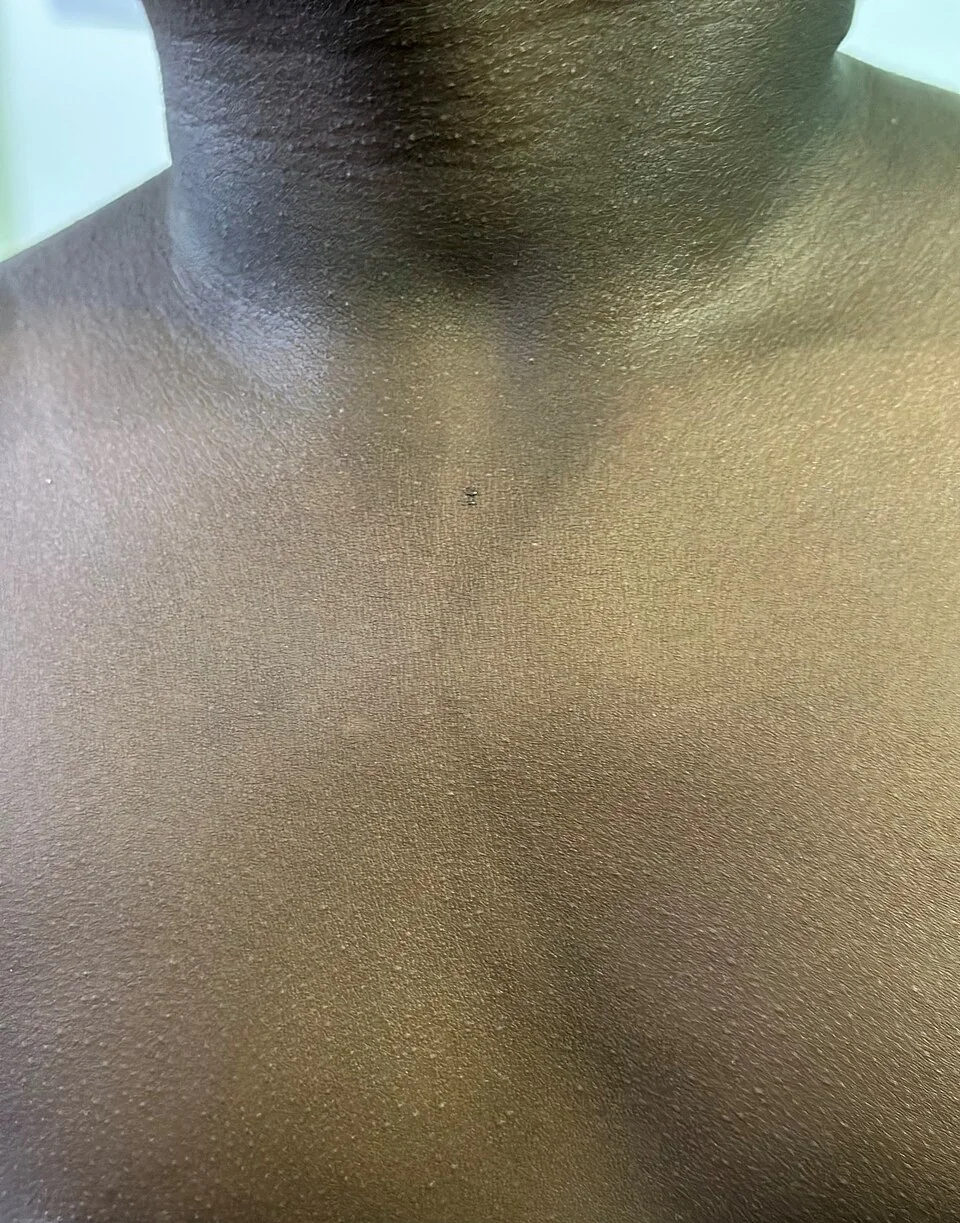
- Fine punctate erythema with a characteristic sandpaper texture on palpation - feeling the rash is more reliable than looking at it
- Blanching on pressure
- Begins on the trunk, neck and axillae and spreads centrifugally within 24 hours
- Flexural accentuation, with linear petechial streaks in the antecubital fossae, axillae and groin known as Pastia's lines
- Facial flushing with circumoral pallor - a red face with a conspicuous white ring around the mouth
- Spares the palms and soles, which distinguishes it from Kawasaki disease and from toxic shock syndrome
- Fades after about a week, followed by desquamation of the fingertips, toes, palms, soles and groin that begins around day 7-10 and can continue for up to 6 weeks
The mouth and throat
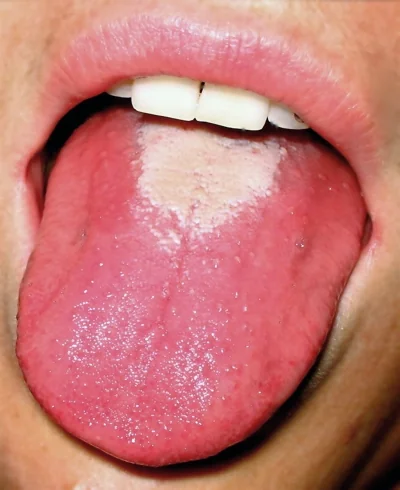
- White strawberry tongue in the first 1-2 days: a thick white coating with swollen red papillae projecting through it
- Red (raspberry) strawberry tongue around day 4-5, once the white coating has desquamated, leaving a beefy red tongue with prominent papillae
- Erythematous tonsils, often with exudate
- Palatal petechiae and a red oedematous uvula
- Tender anterior cervical lymphadenopathy
Differential diagnosis
| Condition | Rash | Discriminating features |
|---|---|---|
| Scarlet fever | Fine punctate sandpaper erythema, flexural accentuation, spares palms and soles | Strawberry tongue, circumoral pallor, exudative tonsillitis, abrupt onset, responds to penicillin |
| Kawasaki disease | Polymorphous, no fixed morphology, often perineal desquamation early | Fever for 5 days or more, bilateral non-purulent conjunctivitis, cracked lips, palm and sole erythema and later peeling, unilateral cervical node |
| Measles | Maculopapular, starts behind the ears and spreads down, becomes confluent | Koplik spots, prominent cough, coryza and conjunctivitis, miserable child, unimmunised |
| Staphylococcal scalded skin syndrome | Tender diffuse erythema then superficial blistering and sheet-like peeling | Positive Nikolsky sign, perioral crusting, mucosae spared, young child looks very unwell |
| Toxic shock syndrome | Diffuse macular erythroderma with later desquamation of palms and soles | Hypotension and multi-organ involvement, palms and soles affected |
| Infectious mononucleosis | Widespread maculopapular rash, classically after amoxicillin | Adolescent, marked fatigue, posterior cervical nodes, splenomegaly, atypical lymphocytes |
| Drug eruption | Morbilliform, itchy | Temporal relation to a new drug, no strawberry tongue, less systemically unwell |
Investigations
Scarlet fever is a clinical diagnosis and treatment should not wait for a result.
- Throat swab for culture - confirms group A streptococcus but takes 48 hours. UKHSA encourages swabbing to support surveillance, but antibiotics are started at the consultation.3
- Rapid antigen detection tests are used in some settings. A positive result is useful; a negative one does not exclude infection in a child with a convincing clinical picture.
- FBC - neutrophilia is usual, with eosinophilia appearing in the second week in some children. Not routinely needed.
- Anti-streptolysin O (ASO) titre - has no role in acute diagnosis, since it takes 2-4 weeks to rise. It is used retrospectively when investigating suspected rheumatic fever or post-streptococcal glomerulonephritis.
- Blood cultures and inflammatory markers - only where invasive group A streptococcal disease is suspected
Management
Antibiotics
Phenoxymethylpenicillin (penicillin V) for 10 days is first line. The ten-day course is deliberate and differs from the five days given for uncomplicated sore throat: it is the duration shown to eradicate the organism from the pharynx and to prevent acute rheumatic fever.1,4
| Age | Dose |
|---|---|
| 1 month to 11 months | 62.5 mg four times a day |
| 1 to 5 years | 125 mg four times a day |
| 6 to 11 years | 250 mg four times a day |
| 12 to 17 years | 500 mg four times a day |
- Penicillin allergy: clarithromycin for 5 days, or erythromycin in pregnancy. Group A streptococcus remains universally sensitive to penicillin, so a macrolide is a second choice rather than an equivalent one.
- Palatability: amoxicillin is a reasonable alternative where a child will not take penicillin V, which has a notoriously unpleasant taste and requires four doses a day
- Adjuncts: paracetamol or ibuprofen for fever and throat pain, adequate fluids, and soft foods
- Do not give aspirin to a child under 16, because of the risk of Reye's syndrome
Most children are managed entirely in primary care. Admission is needed only for dehydration, an inability to swallow, a suspected suppurative complication such as quinsy, or any suspicion of invasive disease. A child who remains febrile after 48 hours of penicillin has either a complication, a wrong diagnosis or is not actually taking the medicine - and all three are worth checking before escalating the antibiotic.
Public health and exclusion
- Notify the local health protection team on clinical suspicion - do not wait for the swab6
- Exclude from school or nursery until 24 hours after the first dose of appropriate antibiotics
- Advise hand hygiene, covering coughs, and not sharing cups, cutlery, flannels or towels
- Routine antibiotic prophylaxis for contacts is not recommended, but symptomatic household contacts should be assessed and treated
- Two or more cases in a school or nursery within 10 days should be reported so that an outbreak can be assessed7
- Advise the family to seek review if the child is not improving within 24-48 hours of starting antibiotics
Complications
Suppurative - from direct spread
- Acute otitis media - the commonest complication
- Peritonsillar abscess (quinsy) - trismus, uvular deviation, muffled voice
- Retropharyngeal abscess, sinusitis, mastoiditis and cervical lymphadenitis
- Pneumonia and empyema
- Meningitis and brain abscess, rare but described
Toxin-mediated and invasive
- Streptococcal toxic shock syndrome - fever, erythroderma, hypotension and multi-organ failure, with a high mortality
- Necrotising fasciitis
- Bacteraemia and septic arthritis
Immune-mediated - after the acute illness
| Acute rheumatic fever | Post-streptococcal glomerulonephritis | |
|---|---|---|
| Latency | 2-4 weeks after pharyngitis | 1-2 weeks after pharyngitis, 3-6 weeks after skin infection |
| Features | Migratory polyarthritis, carditis, Sydenham's chorea, erythema marginatum, subcutaneous nodules - the Jones criteria | Haematuria giving cola-coloured urine, oedema particularly periorbital, hypertension, mild proteinuria |
| Prevented by antibiotics? | Yes - this is the main reason for the 10-day course | No - treating the pharyngitis does not reliably prevent it |
| Prognosis | Carditis may leave permanent valve disease, most often mitral stenosis | Usually self-limiting in children, with over 95% recovering fully |
| UK frequency | Now rare, but still seen in some populations and in the returning traveller | Uncommon but still encountered |
Prognosis
With treatment, fever settles within 24-48 hours and the child feels substantially better within 2-3 days. The rash fades over about a week and desquamation follows, which is not a sign of ongoing infection and needs nothing more than emollient and reassurance - parents are frequently alarmed by the peeling and should be warned about it in advance.
Untreated, scarlet fever is still usually self-limiting over a week or so, but with a longer period of infectivity, a higher rate of suppurative complications, and a small but real risk of acute rheumatic fever. Deaths in the UK are rare and are almost always due to invasive group A streptococcal disease rather than to scarlet fever itself.2
There is no vaccine. Control therefore rests on prompt recognition, a full course of penicillin, 24-hour exclusion, and a low threshold for reassessing the child who does not improve - which is exactly the sequence an examiner will expect you to describe.
References
- NICE Clinical Knowledge Summaries. Scarlet fever. Available here
- UKHSA. Group A streptococcal infections: guidance and data. Available here
- UKHSA. Scarlet fever: symptoms, diagnosis and treatment. Available here
- BNF for Children. Phenoxymethylpenicillin. Available here
- NICE NG84. Sore throat (acute): antimicrobial prescribing. 2018. Available here
- UKHSA. Notifiable diseases and causative organisms: how to report. Available here
- UKHSA. Group A streptococcal infections: managing outbreaks in schools, nurseries and other childcare settings. Available here
This article is written for revision and education. It is not clinical guidance and must not be used to make decisions about the care of a patient. Always check current NICE guidance and local protocols.