
Antenatal Care and Screening
Key points
- Purpose: antenatal care detects treatable maternal disease, screens for fetal anomaly, and identifies pregnancies needing consultant-led rather than midwife-led care.
- Schedule: 10 appointments for a nulliparous woman and 7 for a parous woman with an uncomplicated pregnancy, starting with booking by 10 weeks.
- Booking bloods: FBC, blood group and antibody screen, haemoglobinopathy screening, HIV, hepatitis B and syphilis; rubella is no longer screened for.
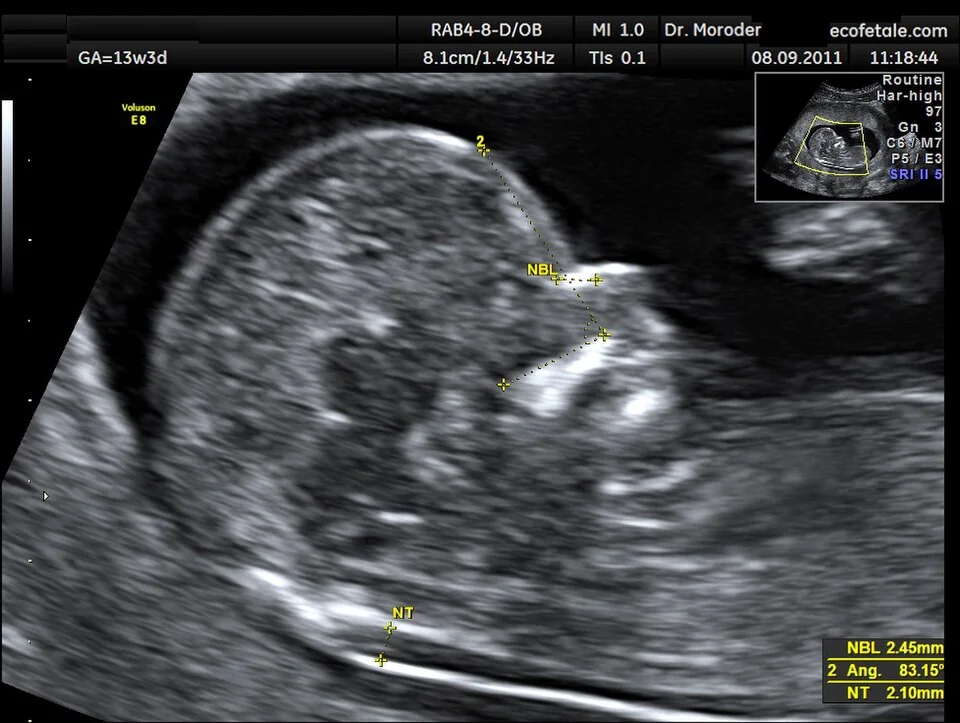
- Dating: crown-rump length between 11+2 and 14+1 weeks, or head circumference if the CRL is above 84 mm.
- Trisomy screening: combined test (nuchal translucency, PAPP-A, beta-hCG) at 11+2 to 14+1 weeks, or the quadruple test at 14+2 to 20+0 weeks if presenting late.
- Anomaly scan: 18+0 to 20+6 weeks, screening for 11 specified structural conditions and locating the placenta.
- Supplements: folic acid 400 micrograms daily until 12 weeks (5 mg if high risk) and vitamin D 10 micrograms daily throughout.
- Prophylaxis: aspirin 75-150 mg daily from 12 weeks for those at risk of pre-eclampsia, and anti-D at 28 weeks if RhD negative.
Introduction
Antenatal care is the programme of appointments, screening tests and advice offered to every pregnant woman in the UK. Its purpose is not simply to monitor a physiological process but to identify the minority of pregnancies in which intervention changes outcome: the woman with undiagnosed anaemia, the fetus with growth restriction, the placenta lying over the cervical os. Most of the schedule is therefore surveillance of low-risk pregnancy punctuated by decision points at which risk is reassessed.1
Care is delivered largely by midwives, with obstetric input reserved for pregnancies flagged at booking or by later complications. NICE recommends 10 antenatal appointments for a nulliparous woman with an uncomplicated pregnancy and 7 for a parous woman, on the basis that a parous woman has already demonstrated how her uterus and cardiovascular system behave under the load of pregnancy.1 Continuity of carer is associated with fewer preterm births and greater satisfaction, and is the model the NHS is working towards.
Screening in pregnancy is delivered through three national programmes: Fetal Anomaly Screening (FASP), Infectious Diseases in Pregnancy Screening (IDPS), and Sickle Cell and Thalassaemia (SCT) screening.2 Every test is offered, not imposed; informed consent, and equally informed declining, is a core part of the consultation and a frequent OSCE station.
The booking appointment
Booking should occur by 10 weeks of gestation, which in practice means the woman must present within the first few weeks after a missed period. Early booking matters because several interventions are time-critical: aspirin for pre-eclampsia prophylaxis is most effective when started before 16 weeks, the combined test has a narrow window, and dating becomes progressively less accurate as pregnancy advances.
History and risk assessment
The booking history is long because it doubles as a risk stratification tool. It covers obstetric history (parity, previous mode of delivery, previous pre-eclampsia, preterm birth, stillbirth or growth restriction), medical history (hypertension, diabetes, epilepsy, thrombophilia, autoimmune disease, cardiac disease), a full drug history including over-the-counter and herbal preparations, mental health history, and social circumstances including domestic abuse, female genital mutilation and safeguarding concerns.
Height and weight are measured to calculate BMI, blood pressure is recorded as a baseline against which later readings are judged, and urine is sent for culture to detect asymptomatic bacteriuria, which if untreated progresses to pyelonephritis in a substantial minority and is associated with preterm birth.1
Booking bloods
| Test | Purpose |
|---|---|
| Full blood count | Anaemia (treat if Hb below 110 g/L in the first trimester) and a baseline platelet count |
| Blood group and antibody screen | Identifies RhD negative women needing anti-D, and red cell alloantibodies causing haemolytic disease of the fetus |
| Haemoglobinopathy screening | Sickle cell and thalassaemia; universal or guided by the Family Origin Questionnaire depending on local prevalence |
| HIV | Treatment reduces vertical transmission from around 25% to under 1% |
| Hepatitis B surface antigen | Allows neonatal vaccination and immunoglobulin at birth |
| Syphilis serology | Congenital syphilis is entirely preventable with maternal benzylpenicillin |
| HbA1c or glucose (selected women) | Detects pre-existing undiagnosed diabetes in those with risk factors |
The appointment schedule
Every appointment from 24 weeks includes blood pressure, urine dipstick for protein, symphysis-fundal height and enquiry about fetal movements. The table below shows what is additionally done at each visit.
| Gestation | What happens |
|---|---|
| Booking (by 10 weeks) | History, BMI, BP, booking bloods, urine culture, risk assessment, aspirin decision, supplement advice |
| 11+2 to 14+1 | Dating scan by crown-rump length; combined test offered |
| 16 weeks | Review screening results, BP, urine; discuss the anomaly scan |
| 18+0 to 20+6 | Fetal anomaly scan and placental localisation |
| 25 weeks (nulliparous only) | BP, urine, symphysis-fundal height |
| 28 weeks | Repeat FBC and antibody screen; first anti-D dose if RhD negative; oral glucose tolerance test if indicated |
| 31 weeks (nulliparous only) | Review 28-week results, routine checks |
| 34 weeks | Second anti-D dose if on the two-dose regimen; discuss labour and the birth plan |
| 36 weeks | Determine fetal presentation; refer for external cephalic version if breech; discuss feeding and vitamin K |
| 38 weeks | Routine checks; discuss management of prolonged pregnancy |
| 40 weeks (nulliparous only) | Routine checks |
| 41 weeks | Offer a membrane sweep and induction of labour between 41+0 and 42+0 |
Screening for trisomies
The Fetal Anomaly Screening Programme offers screening for trisomy 21 (Down's syndrome), trisomy 18 (Edwards' syndrome) and trisomy 13 (Patau's syndrome). Screening gives a chance, not a diagnosis; a chance of 1 in 150 or greater is reported as a higher-chance result and prompts an offer of further testing.2
The combined test
Offered between 11+2 and 14+1 weeks, the combined test uses three variables alongside maternal age: nuchal translucency measured on ultrasound, serum pregnancy-associated plasma protein A (PAPP-A), and free beta-hCG. In trisomy 21 the nuchal translucency is increased, PAPP-A is low and beta-hCG is high. In trisomies 18 and 13 both PAPP-A and beta-hCG are low. The combined test detects approximately 85% of affected pregnancies for a false positive rate of around 3%.2,4
The quadruple test
If a woman books too late for the combined test, or the nuchal translucency cannot be obtained because of fetal position or maternal habitus, the quadruple test is offered between 14+2 and 20+0 weeks. It measures alpha-fetoprotein, unconjugated oestriol, total hCG and inhibin A. In trisomy 21, AFP and oestriol are low while hCG and inhibin A are high. It is a second-line test only, screens for trisomy 21 alone, and has a lower detection rate of around 80%.2
Non-invasive prenatal testing
NIPT analyses cell-free fetal DNA in maternal plasma, which derives from placental trophoblast and constitutes roughly 10% of circulating cell-free DNA from 10 weeks. In the NHS it is offered as a contingent second-line test to women with a higher-chance combined or quadruple result. Its detection rate for trisomy 21 exceeds 99% with a false positive rate below 0.1%, so it substantially reduces the number of women proceeding to invasive testing. It remains a screening test: a positive NIPT still requires confirmation by CVS or amniocentesis before any irreversible decision.5
Diagnostic testing
- Chorionic villus sampling - transabdominal or transcervical sampling of placental tissue from 11 weeks; the result is available earlier, allowing earlier termination if that is chosen
- Amniocentesis - transabdominal aspiration of amniotic fluid from 15 weeks; performed earlier it carries an unacceptable rate of talipes and respiratory morbidity
- Both carry a procedure-related miscarriage risk of approximately 0.5% or less in experienced hands
- Rapid results by QF-PCR are available within 3 working days for the common trisomies, with full karyotype or microarray taking 2-3 weeks
- Anti-D prophylaxis is required after either procedure in an RhD negative woman, because both are potentially sensitising events
The fetal anomaly scan
Performed between 18+0 and 20+6 weeks, the anomaly scan is a structured survey of fetal anatomy. FASP specifies 11 conditions the scan is designed to detect, and publishes detection rates for each so that women understand the scan is not a guarantee of normality.
- Anencephaly and open spina bifida
- Cleft lip
- Congenital diaphragmatic hernia
- Gastroschisis and exomphalos
- Serious cardiac anomalies
- Bilateral renal agenesis
- Lethal skeletal dysplasia
- Edwards' syndrome (trisomy 18) and Patau's syndrome (trisomy 13)
Detection rates vary widely by condition: anencephaly is detected in around 98% of cases, whereas serious cardiac anomalies are detected in roughly 50%.2 The scan also localises the placenta. If the placenta is low-lying, a repeat scan is arranged at around 32 weeks, because the majority of low-lying placentas at 20 weeks appear to migrate away from the os as the lower uterine segment forms.
Supplements, lifestyle and vaccination
Folic acid
Folic acid 400 micrograms daily is recommended from before conception until 12 weeks of gestation to reduce the risk of neural tube defects, which close by day 28 after conception. A 5 mg daily dose is recommended where the risk of a neural tube defect is increased: a previous affected pregnancy, either parent having a neural tube defect, diabetes mellitus, BMI of 30 or above, sickle cell disease or thalassaemia, coeliac disease, and antiepileptic drugs, particularly sodium valproate and carbamazepine.6
Vitamin D, iron and vitamin A
Vitamin D 10 micrograms (400 units) daily is advised throughout pregnancy and breastfeeding. Women should be told to avoid vitamin A supplements and liver, because retinol is teratogenic in high doses. Iron is not given routinely but treats anaemia when it is detected; the thresholds for treatment are 110 g/L in the first trimester, 105 g/L in the second and third trimesters, and 100 g/L postpartum.
Lifestyle advice
- Alcohol - the safest approach is to avoid alcohol entirely, particularly in the first trimester
- Smoking - offer carbon monoxide monitoring at booking and at 36 weeks, and refer to smoking cessation services; nicotine replacement therapy is preferable to continued smoking
- Food hygiene - avoid unpasteurised dairy and soft mould-ripened cheese (listeria), undercooked meat and unwashed vegetables (toxoplasmosis), and avoid shark, swordfish and marlin while limiting oily fish (mercury)
- Caffeine - limit to 200 mg daily, roughly two mugs of instant coffee
- Exercise - moderate exercise is encouraged; avoid contact sports, scuba diving and activities with a high risk of falling
- Travel - long-haul flights increase VTE risk; most airlines will not carry women after 37 weeks, or 32 weeks in a multiple pregnancy
Vaccination
- Pertussis - offered from 16 weeks, ideally between 16 and 32 weeks, so that transplacental antibody protects the newborn before their own primary immunisations at 8 weeks
- Influenza - offered in any trimester during the flu season, because pregnant women are at increased risk of severe influenza
- RSV - offered from 28 weeks under the programme introduced in 2024, again to protect the neonate through passive antibody transfer
- COVID-19 - offered according to the current national schedule
- Live vaccines (MMR, varicella, BCG, yellow fever) are contraindicated in pregnancy and deferred until postnatally
Targeted prophylaxis
Aspirin for pre-eclampsia
Aspirin 75-150 mg daily from 12 weeks until birth is offered to women with one high-risk factor or two or more moderate-risk factors. The high-risk factors are hypertensive disease in a previous pregnancy, chronic hypertension, chronic kidney disease, diabetes mellitus, and autoimmune disease such as SLE or antiphospholipid syndrome. The moderate-risk factors are first pregnancy, age 40 or over, BMI 35 or above at booking, family history of pre-eclampsia, a pregnancy interval of more than 10 years, and multiple pregnancy.7
Anti-D immunoglobulin
RhD negative women without pre-existing anti-D antibodies are offered routine antenatal anti-D prophylaxis, either as a single dose of 1500 IU at 28 weeks or as two doses at 28 and 34 weeks. Anti-D is also given within 72 hours of any potentially sensitising event, with a Kleihauer test after 20 weeks to quantify the fetomaternal haemorrhage and determine whether further doses are needed. Many trusts now offer cell-free fetal DNA RHD genotyping from 16 weeks, which identifies the roughly 40% of RhD negative women carrying an RhD negative fetus and spares them unnecessary prophylaxis.8
Venous thromboembolism
Every woman has a VTE risk assessment at booking, on any antenatal admission, and again postnatally. Pregnancy is a hypercoagulable state and thromboembolism remains a leading direct cause of maternal death in the UK. Depending on the score, low molecular weight heparin is started at booking, from 28 weeks, or postnatally only.
Gestational diabetes
A 75 g oral glucose tolerance test is offered at 24-28 weeks to women with any of: BMI above 30, a previous macrosomic baby weighing 4.5 kg or more, previous gestational diabetes, a first-degree relative with diabetes, or a family origin with a high prevalence of diabetes. Women with previous gestational diabetes are additionally offered testing as soon as possible after booking.
Common problems raised in antenatal clinic
A large proportion of antenatal consultations concern symptoms that are physiological rather than pathological. Recognising them saves unnecessary investigation, but each has a differential that must be consciously excluded: heartburn that is truly epigastric pain may be pre-eclampsia, and unilateral leg swelling is never simply oedema of pregnancy.
| Symptom | Management |
|---|---|
| Nausea and vomiting | Reassurance and dietary advice; antihistamines such as cyclizine or promethazine first line if treatment is needed |
| Heartburn | Dietary and posture advice, then antacids; omeprazole if severe |
| Constipation | Increase fibre and fluid intake, then bulk-forming laxatives |
| Haemorrhoids | Dietary measures and topical preparations |
| Varicose veins and ankle oedema | Compression stockings, elevation, exercise |
| Pelvic girdle pain | Physiotherapy referral, pelvic support belt, paracetamol |
| Increased vaginal discharge | Physiological increase is normal; swab if there is itch, odour or soreness |
Red flags
Escalating from midwife-led to consultant-led care
The booking assessment sorts women into midwife-led care, with a planned birth at home, in a midwifery-led unit or on an obstetric unit, versus consultant-led care. Factors prompting obstetric involvement include pre-existing medical disease, BMI of 35 or above, age 40 or over, previous caesarean section, previous pre-eclampsia or preterm birth, previous stillbirth or growth restriction, multiple pregnancy, and a significant mental health history.
Risk is dynamic rather than fixed at booking. A woman booked as low risk who develops gestational hypertension, a fetus measuring small for dates, or a breech presentation at 36 weeks moves into obstetric care at that point. Equally, an issue that resolves does not commit her to consultant care for the rest of the pregnancy. Documenting that reassessment at every contact is, in large part, what the schedule of appointments exists for.1
References
- NICE NG201. Antenatal care. 2021. Available here
- GOV.UK. NHS population screening programme overviews (FASP, IDPS, SCT). Available here
- NHS England. Saving Babies' Lives Care Bundle version 3. 2023. Available here
- Wolfgang Moroder, CC BY-SA 3.0, via Wikimedia Commons. Available here
- RCOG Scientific Impact Paper No. 15. Non-invasive prenatal testing for chromosomal abnormality using maternal plasma DNA. Available here
- BNF. Folic acid - indications and dose. Available here
- NICE NG133. Hypertension in pregnancy: diagnosis and management. 2019. Available here
- RCOG Green-top Guideline No. 22. The use of anti-D immunoglobulin for rhesus D prophylaxis. Available here
- RCOG Green-top Guideline No. 57. Reduced fetal movements. Available here
This article is written for revision and education. It is not clinical guidance and must not be used to make decisions about the care of a patient. Always check current NICE guidance and local protocols.