
Occupational Lung Disease: Asbestos, Dusts and the Question You Must Ask
Key points
- The essential question: take a full occupational history from leaving school onwards in every patient with unexplained respiratory disease. Latency can be decades, so a job held in a patient's twenties still matters.
- Occupational asthma: accounts for around 1 in 10 cases of adult-onset asthma. Symptoms improve away from work, and early removal from exposure can cure it.
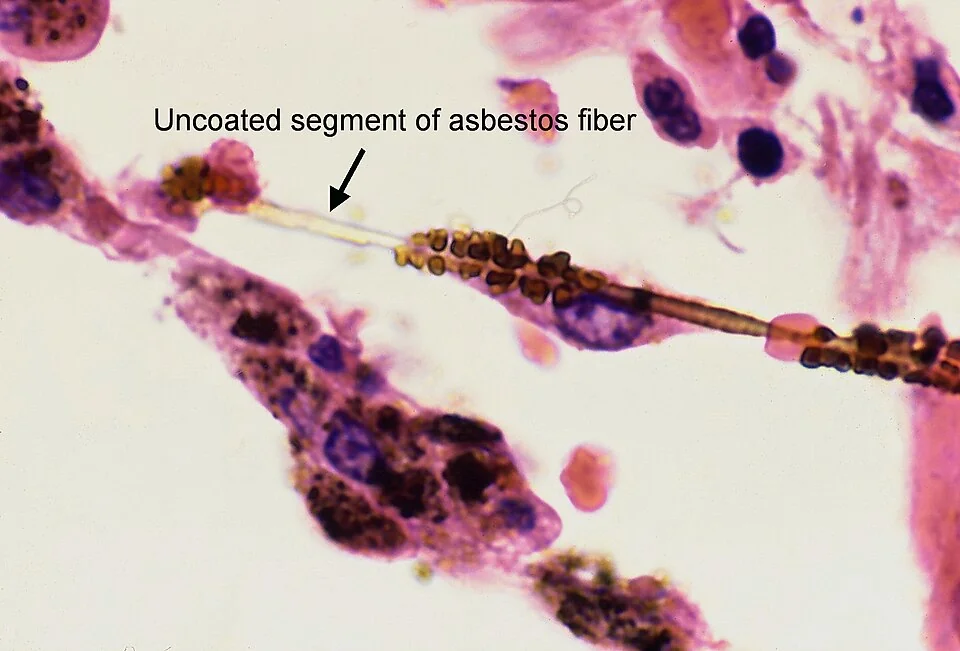
- Asbestos: causes pleural plaques, diffuse pleural thickening, benign effusion, asbestosis, lung cancer and mesothelioma. Blue (crocidolite) is the most dangerous fibre type.
- Pleural plaques: benign, symptomless, and a marker of exposure rather than a disease. They do not become malignant and do not attract compensation in England and Wales.
- Asbestos and smoking: act multiplicatively on lung cancer risk, but mesothelioma risk is not increased by smoking and can follow even brief exposure.
- Mesothelioma: latency of 20 to 40 years, presenting with chest pain, breathlessness and a pleural effusion. Median survival is around 8 to 14 months.
- Pneumoconioses: coal worker's pneumoconiosis, silicosis and asbestosis. The first two are upper zone; asbestosis is lower zone.
- Duties: report under RIDDOR, advise on Industrial Injuries Disablement Benefit, and report every mesothelioma death to the coroner.
Introduction
Occupational lung disease is respiratory disease caused or made worse by exposures at work. It matters disproportionately for three reasons that do not apply to most other respiratory conditions:
- It is preventable. Every case represents a failure of workplace control, and identifying one case often protects the patient's colleagues.
- Removal from exposure can arrest or cure it. In occupational asthma and hypersensitivity pneumonitis, early removal may reverse the disease entirely, whereas continued exposure leaves permanent damage.
- There are legal and financial consequences. Patients may be entitled to Industrial Injuries Disablement Benefit and to civil compensation, doctors have statutory reporting duties, and some diagnoses must be reported to the coroner.
Asbestos-related disease
Asbestos is a family of naturally occurring fibrous silicates, used extensively in construction, shipbuilding, insulation, brake linings and boiler lagging. It was progressively banned in the UK, with all use prohibited from 1999, but because of the long latency the incidence of asbestos-related disease has only recently peaked. Enormous quantities remain in place in older buildings, so exposure continues in construction, maintenance, demolition and joinery trades.
- Chrysotile (white) - serpentine, curly fibres, the most widely used and the least hazardous, though not harmless
- Amosite (brown) and crocidolite (blue) - amphiboles, straight needle-like fibres that penetrate deeply and are cleared poorly. Crocidolite is the most dangerous, with the highest mesothelioma risk.
| Condition | Features |
|---|---|
| Pleural plaques | Discrete areas of hyaline fibrosis on the parietal pleura, frequently calcified, classically over the diaphragm and posterolateral chest wall. Benign, asymptomatic, and do not become malignant. They are a marker of exposure, not a disease, and following the House of Lords ruling in Rothwell (2007) they do not attract compensation in England and Wales. Latency 20 to 30 years. |
| Diffuse pleural thickening | Extensive thickening of the visceral pleura that restricts lung expansion. Unlike plaques it causes breathlessness and a restrictive defect, and it is compensatable. |
| Benign asbestos pleural effusion | The earliest manifestation, typically within 10 to 20 years of exposure. An exudative, often blood-stained effusion. A diagnosis of exclusion - mesothelioma must be excluded, and prolonged follow-up is required. |
| Asbestosis | Diffuse interstitial fibrosis, lower zone and subpleural, requiring heavy and prolonged exposure with a latency of 15 to 30 years. Progressive breathlessness, fine bibasal crackles and clubbing, with a restrictive defect and reduced TLCO. Dose-related, unlike mesothelioma. |
| Lung cancer | Risk raised by asbestos, and multiplicatively increased by smoking - a smoker exposed to asbestos has a far greater risk than the sum of the two individual risks. This makes smoking cessation advice especially important in exposed workers. |
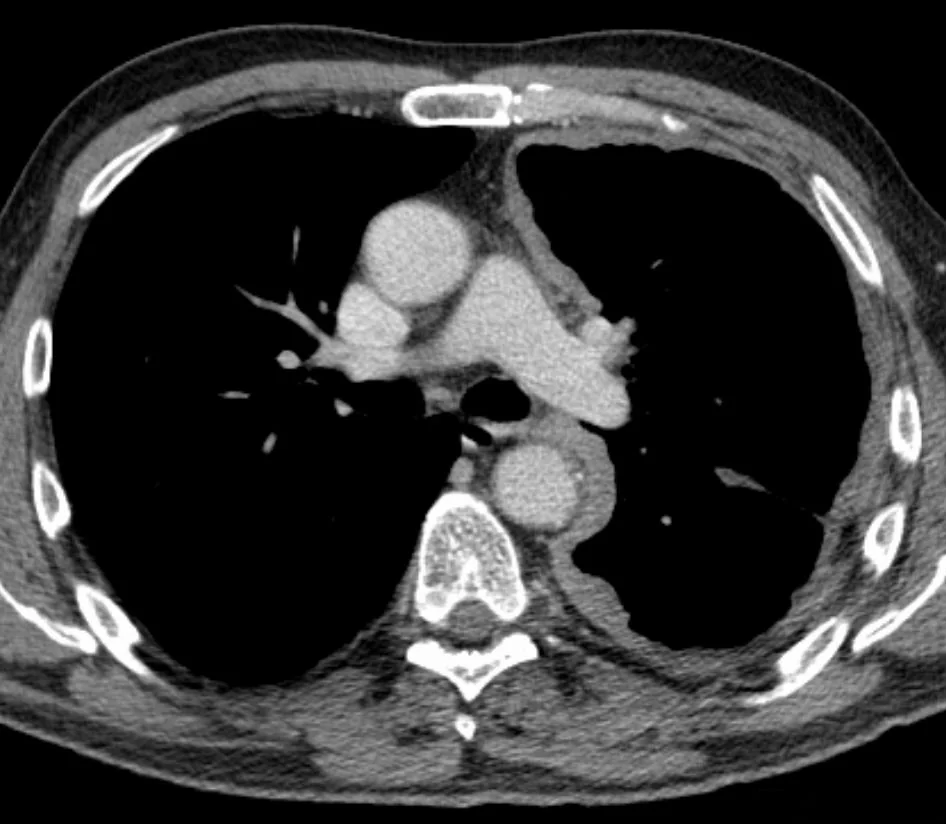
| Mesothelioma | Malignancy of the pleura (or peritoneum). Latency 20 to 40 years, not related to smoking, and may follow relatively brief or low-level exposure. |
Mesothelioma
The UK has among the highest mesothelioma rates in the world, a legacy of heavy industrial asbestos use into the 1970s, with around 2,700 deaths a year.3
- Presentation - insidious chest pain (often dull, persistent and not clearly pleuritic), breathlessness from a pleural effusion, weight loss, sweats and fatigue. Chest wall masses and hoarseness occur with local invasion.
- Imaging - a unilateral pleural effusion with nodular, circumferential pleural thickening, involvement of the mediastinal pleura, and volume loss on the affected side. Contrast CT is the key investigation.
- Diagnosis - requires histology. Pleural fluid cytology is often negative, so local anaesthetic thoracoscopy with pleural biopsy is the investigation of choice, giving both tissue and the opportunity for talc pleurodesis.
- Subtypes - epithelioid (commonest, best prognosis), sarcomatoid (worst) and biphasic
- Treatment - chemotherapy with pemetrexed and cisplatin, and immunotherapy with nivolumab and ipilimumab as a first-line option. Radical surgery has not shown survival benefit in trials and is not standard care. Management is largely about symptom control - talc pleurodesis or an indwelling pleural catheter for the effusion, and good analgesia for what is often difficult neuropathic chest wall pain.
- Median survival is around 8 to 14 months from diagnosis
The pneumoconioses
A pneumoconiosis is lung disease caused by the inhalation and retention of mineral dust and the tissue reaction to it.
Coal worker's pneumoconiosis
- Caused by inhaled coal dust accumulating in macrophages around respiratory bronchioles, with a latency of 15 to 20 years of exposure
- Simple pneumoconiosis - small upper zone nodules on imaging, usually asymptomatic and with little functional impairment. It is graded radiologically, and the grade determines benefit entitlement.
- Progressive massive fibrosis (complicated pneumoconiosis) - nodules coalesce into large upper zone masses, often with cavitation, causing breathlessness, black sputum (melanoptysis), a mixed obstructive and restrictive defect, and eventually respiratory failure and cor pulmonale
- Caplan syndrome - the combination of rheumatoid arthritis with pneumoconiosis, producing multiple well-defined peripheral pulmonary nodules that may cavitate. Recognised in coal workers, and also with silica and asbestos exposure.
- There is no specific treatment - management is removal from exposure, smoking cessation, vaccination, pulmonary rehabilitation and oxygen
Silicosis
- Caused by crystalline silica in quarrying, mining, stone masonry, foundry work, sandblasting, ceramics and pottery
- There is a current UK and international outbreak among workers fabricating engineered (artificial) stone kitchen worktops, which contain a very high silica content and are cut dry. This has caused severe, rapidly progressive silicosis in young workers, and is worth asking about specifically.
- Imaging - upper zone nodules, progressing to progressive massive fibrosis, with eggshell calcification of the hilar lymph nodes as a characteristic (though not universal) sign
- Acute silicoproteinosis - after very heavy short-term exposure, presenting within months with rapidly progressive breathlessness and alveolar filling on imaging
- Silica markedly increases the risk of tuberculosis - silicotuberculosis. Screen for latent and active TB in anyone with silicosis, and have a low threshold for investigating new symptoms.
- Silica is a recognised human carcinogen and increases lung cancer risk
- No specific treatment; management is exposure removal, TB screening and supportive care
Berylliosis
Chronic beryllium disease occurs in aerospace, electronics, nuclear and dental technology work. It is a granulomatous disease that is clinically and radiologically almost indistinguishable from sarcoidosis - upper zone nodules and hilar lymphadenopathy - and is separated from it by the exposure history and a beryllium lymphocyte proliferation test. It responds to corticosteroids.
Occupational airways disease
Occupational asthma
Around 1 in 10 cases of adult-onset asthma is caused by a workplace sensitiser, making it the commonest occupational lung disease in the UK.2 It is critically important because early removal from exposure can cure it, whereas continued exposure produces permanent asthma.
- Common sensitisers - isocyanates (spray painting, especially in vehicle body shops, the commonest UK cause), flour and grain dust (bakers, millers), latex (healthcare), colophony (soldering flux), wood dusts, laboratory animals, enzymes in detergent manufacture, glutaraldehyde, and persulphate salts in hairdressing
- The clue - symptoms that improve at weekends and on holiday and recur on returning to work. There may be a latency of weeks to years between first exposure and the onset of symptoms, and symptoms may occur several hours after leaving work, which obscures the link.
- Investigation - serial peak flow measurements at and away from work, ideally four or more times daily for at least 3 weeks with time both at and away from work, plus specific IgE or skin prick testing where an antigen is available
- Management - complete removal from exposure, urgently. Redeployment within the workplace is preferable to job loss where it can genuinely avoid exposure. Standard asthma treatment continues alongside. Refer every suspected case to an occupational lung disease specialist.
- Distinguish from irritant-induced asthma (including reactive airways dysfunction syndrome), which follows a single high-level exposure to an irritant such as chlorine and involves no sensitisation, and from work-aggravated asthma, in which pre-existing asthma is worsened but not caused by work
Byssinosis
Caused by inhaling cotton, flax or hemp dust in textile mills. The characteristic feature is chest tightness and breathlessness that are worst on the first day back at work after a break and improve through the week - historically called Monday fever. With prolonged exposure the symptoms become persistent and a fixed obstructive defect develops.
Occupational COPD
Often forgotten, but around 15% of COPD is attributable to occupational exposure to dusts, gases, fumes and vapours - in mining, construction, welding, agriculture and textiles. It matters because it is compensatable in some circumstances and because it is preventable.
Metal fume fever
An acute self-limiting illness following inhalation of zinc oxide fumes, typically after welding or cutting galvanised metal. Fever, chills, myalgia, headache and a metallic taste begin a few hours after exposure and resolve within 24 to 48 hours. It is benign and does not cause chronic lung disease, but is easily mistaken for infection.
Hypersensitivity pneumonitis
Also called extrinsic allergic alveolitis, this is an immune-mediated reaction to inhaled organic antigens, involving both immune complex (type III) and cell-mediated (type IV) mechanisms. Unlike asthma it affects the alveoli and distal bronchioles rather than the airways, and it is not IgE-mediated - so patients are not typically atopic.
| Condition | Antigen and exposure |
|---|---|
| Bird fancier's lung | Avian proteins in droppings and feather bloom - pigeon keepers, budgerigar owners, and feather duvets and pillows, which are frequently overlooked |
| Farmer's lung | Thermophilic actinomycetes and Aspergillus in mouldy hay, grain and straw |
| Malt worker's lung | Aspergillus clavatus in mouldy barley |
| Mushroom worker's lung | Thermophilic actinomycetes in compost |
| Cheese washer's lung | Penicillium species |
| Hot tub lung | Mycobacterium avium complex in aerosolised water |
| Humidifier and air conditioner lung | Bacteria and amoebae in contaminated water systems |
| Isocyanate and chemical HP | Occupational chemical exposures |
- Acute - fever, chills, dry cough, breathlessness and myalgia beginning 4 to 8 hours after exposure and settling over a day or two. Often misdiagnosed as recurrent chest infection or flu, and the diagnosis is only made when someone notices the pattern.
- Chronic - insidious breathlessness, cough and weight loss with progressive fibrosis, which may become indistinguishable from IPF
- Examination - fine inspiratory crackles and squeaks; clubbing is characteristically absent, which helps separate it from IPF
- Investigations - restrictive spirometry with reduced TLCO, HRCT showing upper and mid zone ground glass with centrilobular nodules and mosaic attenuation with air trapping, serum precipitins (specific IgG) to the suspected antigen, and bronchoalveolar lavage showing a marked lymphocytosis. Note that a positive precipitin indicates exposure, not disease.
- Management - antigen avoidance is the treatment, and complete removal may reverse acute disease entirely. Corticosteroids speed recovery in acute and subacute disease. Once fibrosis is established, the prognosis approaches that of IPF, and antifibrotics may be considered.
Reporting, benefits and prevention
- RIDDOR - the Reporting of Injuries, Diseases and Dangerous Occurrences Regulations require employers to report diagnosed occupational diseases including occupational asthma, hypersensitivity pneumonitis, the pneumoconioses and mesothelioma, where they follow relevant work activities
- Industrial Injuries Disablement Benefit - a no-fault state benefit for prescribed diseases including occupational asthma, asbestosis, pneumoconiosis, diffuse pleural thickening, mesothelioma, byssinosis and occupational COPD in specified circumstances. Pleural plaques alone are not compensatable in England and Wales. Advise patients to claim - many are unaware they can.
- Diffuse Mesothelioma Payment Scheme - a lump sum for people with diffuse mesothelioma who cannot trace a liable employer or insurer. Claims are time-limited, so raise it early.
- Civil claims - patients may wish to seek legal advice, and a clearly documented occupational history in the notes is invaluable to them
- Coroner referral - required for every death from mesothelioma and from other industrial diseases
- Refer to an occupational lung disease specialist for suspected occupational asthma and for any complex case
- Health surveillance - employers must provide it for workers exposed to respiratory sensitisers and dusts, and a case detected in one worker should prompt review of others
- Prevention - substitution, engineering controls (local exhaust ventilation and wet cutting), and respiratory protective equipment as a last resort, under the Control of Substances Hazardous to Health regulations
Red flags
Prognosis
Outcome depends overwhelmingly on how early exposure stops.
- Occupational asthma - around a third of workers removed from exposure early recover completely, and most of the remainder improve. Those who continue working with the sensitiser develop permanent asthma, and the longer the delay between symptom onset and removal, the worse the outcome.
- Hypersensitivity pneumonitis - acute disease may resolve completely with antigen avoidance. Chronic fibrotic disease has a prognosis approaching that of IPF.
- Pleural plaques - no effect on life expectancy or lung function, and reassurance is appropriate. Patients often need this stated explicitly, since a letter mentioning asbestos causes considerable and unnecessary alarm.
- Simple pneumoconiosis - little functional impairment, and it may not progress if exposure ceases. Progressive massive fibrosis causes progressive disability and respiratory failure and may advance even after exposure ends.
- Asbestosis - slowly progressive, with a prognosis broadly similar to other fibrotic lung diseases, and complicated by an increased lung cancer risk
- Mesothelioma - median survival around 8 to 14 months, longer in epithelioid disease and with good performance status, and considerably worse in sarcomatoid disease
The wider point is that all of these conditions are, in principle, entirely preventable. The peak of asbestos-related death in the UK reflects exposures from decades ago, and the current rise in engineered stone silicosis is a reminder that occupational lung disease is not a historical subject. Recognising a case is not only a diagnosis for that patient - it is often the trigger for protecting everyone else in the same workplace.
References
- British Thoracic Society. Standards of care for occupational asthma. Available here
- NICE NG245. Asthma: diagnosis, monitoring and chronic asthma management (BTS, NICE, SIGN). 2024. Available here
- Health and Safety Executive. Work-related respiratory disease statistics in Great Britain. Available here
- Health and Safety Executive. RIDDOR - reporting of injuries, diseases and dangerous occurrences regulations. Available here
- GOV.UK. Industrial Injuries Disablement Benefit and the list of prescribed diseases. Available here
- GOV.UK. Diffuse Mesothelioma Payment Scheme. Available here
- British Thoracic Society. Statement on malignant mesothelioma in the UK. Available here
- NICE NG122. Lung cancer: diagnosis and management. 2019, updated 2024. Available here
- Y. Rosen MD, CC BY-SA 2.0, via Wikimedia Commons. Available here
- Hellerhoff, CC BY-SA 3.0, via Wikimedia Commons. Available here
This article is written for revision and education. It is not clinical guidance and must not be used to make decisions about the care of a patient. Always check current NICE guidance and local protocols.