
Acute Bronchitis: Separating It From Pneumonia and Withholding Antibiotics Safely
Key points
- Acute bronchitis: self-limiting inflammation of the large airways causing an acute cough, usually following a viral upper respiratory tract infection.
- Cause: viral in over 90% of cases - rhinovirus, influenza, RSV, coronaviruses, adenovirus and parainfluenza. Bacterial causes are uncommon.
- The defining distinction: acute bronchitis has no focal chest signs and a normal chest radiograph. Focal signs, or consolidation on the film, mean pneumonia.
- Duration: cough typically lasts 3 weeks and may persist for up to 8 weeks as a post-infectious cough. Sputum turning green does not indicate bacterial infection.
- Management: self-care, fluids, simple analgesia and honey. Most patients need no antibiotic and no investigation.
- CRP in primary care: under 20 mg/L means no antibiotic, 20-100 mg/L a back-up prescription, and above 100 mg/L an immediate antibiotic.
- When to give an antibiotic: systemic illness, high risk of complications from comorbidity, or a diagnosis that has shifted towards pneumonia. Doxycycline is first line in adults.
- Red flag: a cough lasting more than 3 weeks in a smoker over 40, or any haemoptysis or weight loss, requires a chest radiograph to exclude lung cancer.
Introduction
Acute bronchitis is a self-limiting inflammation of the trachea and large bronchi, almost always viral, presenting as an acute cough with or without sputum in a patient who is otherwise systemically well. It is one of the commonest reasons for a primary care consultation in the UK and, along with sore throat and otitis media, one of the largest single drivers of unnecessary antibiotic prescribing.1
Two clinical tasks define the consultation, and the whole article is really about them:
- Excluding pneumonia and the other serious causes of an acute cough - because acute bronchitis is a diagnosis of exclusion made in a well patient with a clear chest
- Withholding antibiotics safely and convincingly - which requires not just the decision but the consultation skills to explain it, since the evidence is unambiguous that antibiotics shorten the illness by well under a day at the cost of side effects and resistance
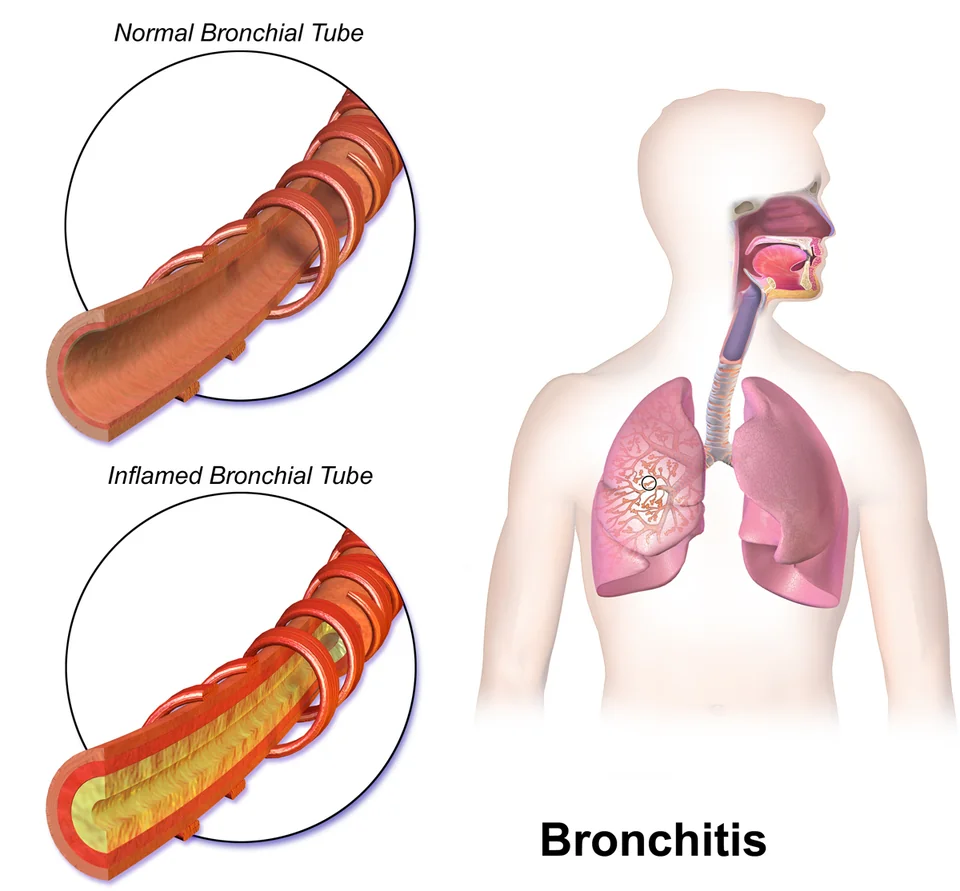
Aetiology
Over 90% of cases are viral. The virus damages the bronchial epithelium, provoking mucosal oedema, mucus hypersecretion and a transient bronchial hyperresponsiveness which explains both the wheeze some patients develop and the cough that lingers for weeks after everything else has settled.
- Viral - rhinovirus (the commonest), influenza A and B, respiratory syncytial virus, coronaviruses including SARS-CoV-2, adenovirus, parainfluenza and human metapneumovirus
- Bacterial - a small minority. Mycoplasma pneumoniae, Chlamydophila pneumoniae and Bordetella pertussis. Streptococcus pneumoniae and Haemophilus influenzae are frequently cultured from sputum but usually represent colonisation rather than the cause.
- Non-infective irritants - tobacco smoke, vaping, air pollution, dusts and chemical fumes, which both cause bronchitis and prolong it
Clinical features
Symptoms
- Cough - the cardinal symptom, initially dry and later productive of clear, yellow or green sputum. It typically lasts around 3 weeks and may persist for up to 8.
- Preceding coryzal illness - sore throat, nasal congestion and rhinorrhoea in the days beforehand
- Retrosternal chest discomfort - a raw or burning sensation, worse with coughing, from tracheal inflammation. This is not pleuritic.
- Wheeze and mild breathlessness - from transient bronchial hyperresponsiveness
- Low-grade fever and malaise - a high fever with rigors should prompt reconsideration
- Hoarseness if the larynx is involved
Examination
The critical finding in acute bronchitis is a normal chest examination, or at most scattered wheeze and coarse crackles that clear on coughing. The patient looks systemically well.
| Feature | Acute bronchitis | Pneumonia |
|---|---|---|
| Systemic upset | Mild | Marked - high fever, rigors, prostration |
| Focal chest signs | Absent | Present - dull percussion, bronchial breathing, increased vocal resonance |
| Crackles | Scattered, coarse, clear on coughing | Localised, do not clear |
| Chest pain | Retrosternal and rawness with coughing | Pleuritic and localised |
| Respiratory rate | Normal | Raised |
| Oxygen saturation | Normal | Often reduced |
| Chest radiograph | Normal | Consolidation |
| Antibiotics | Rarely indicated | Always indicated |
Differential diagnosis
Acute cough has a long differential, and acute bronchitis is the label that remains once the treatable and dangerous causes have been considered.
- Pneumonia - focal signs, systemic upset, consolidation on the radiograph
- Exacerbation of asthma or COPD - a known diagnosis, wheeze, breathlessness, and a fall in peak flow
- Pertussis - paroxysmal coughing, an inspiratory whoop, post-tussive vomiting, and a cough of more than 2 weeks with little else to find
- Influenza and COVID-19 - abrupt onset with high fever, myalgia and headache; anosmia points to COVID-19
- Pulmonary embolism - breathlessness and pleuritic pain with risk factors, and hypoxia out of proportion to the examination
- Heart failure - orthopnoea, paroxysmal nocturnal dyspnoea, bibasal crackles and oedema
- Lung cancer - a cough that persists beyond 3 weeks, haemoptysis, weight loss or hoarseness, particularly in a smoker
- Tuberculosis - a cough over 3 weeks with night sweats, weight loss and relevant exposure or country of origin
- Gastro-oesophageal reflux - a cough worse when supine and after meals
- ACE inhibitor cough - a dry cough beginning weeks to months after starting the drug
- Postnasal drip and upper airway cough syndrome - throat clearing and a sensation of dripping
- Inhaled foreign body - a sudden onset in a child, with unilateral signs
Investigations
Most patients need no investigation at all. Acute bronchitis is a clinical diagnosis, and testing is directed at excluding an alternative rather than confirming it.
- Chest X-ray - only if pneumonia is suspected (focal signs, abnormal observations, marked systemic upset), if the cough has lasted more than 3 weeks, or if there are red flags for malignancy or tuberculosis
- CRP - where the diagnosis is uncertain in primary care and it will change the decision to prescribe (see below)
- Peak flow or spirometry - if the history suggests underlying asthma, particularly in a patient with recurrent episodes
- Pertussis PCR or serology - for a paroxysmal cough lasting more than 2 weeks
- Influenza and SARS-CoV-2 testing - during periods of circulation, where the result affects treatment or infection control
- Sputum culture - not routinely useful, since it usually grows commensal flora
| CRP | Action |
|---|---|
| Below 20 mg/L | Do not routinely offer an antibiotic |
| 20 to 100 mg/L | Consider a back-up (delayed) prescription to be used if symptoms worsen |
| Above 100 mg/L | Offer an immediate antibiotic |
Management
Self-care, which is the treatment
- Explain the expected course - a cough lasting around 3 weeks, sometimes longer, and that this is normal and not a treatment failure. Setting this expectation is the single most effective way to prevent re-consultation.
- Adequate fluids and rest
- Paracetamol or ibuprofen for fever and discomfort
- Honey - the option with the best evidence for symptom relief in acute cough, and suitable for adults and children over 1 year (never under 1 year, because of infant botulism)
- Pelargonium, guaifenesin or dextromethorphan - may be considered in adults and children over 12, though the evidence is weak
- Smoking cessation - smoking both prolongs the illness and predisposes to recurrence
- Safety-net advice - return if breathless, if the fever persists beyond a few days, if the cough lasts more than 3 weeks, if there is haemoptysis, or if symptoms worsen after initially improving
Antibiotics
NICE guidance is explicit that antibiotics should not routinely be offered for acute cough associated with an upper respiratory tract infection or acute bronchitis in an otherwise well person.1 The benefit is a reduction in cough duration of well under a day, against a meaningful rate of diarrhoea, rash and candidiasis, and a contribution to antimicrobial resistance.
Consider a back-up or immediate antibiotic where the patient is:
- Systemically very unwell
- At higher risk of complications - significant comorbidity such as heart, lung, liver, renal or neuromuscular disease, immunosuppression, cystic fibrosis, or a premature young child
- Over 65 with two, or over 80 with one, of: hospital admission in the past year, type 1 or 2 diabetes, a history of congestive cardiac failure, or current use of oral corticosteroids
| Group | First line | Alternatives |
|---|---|---|
| Adults | Doxycycline 200 mg on day 1, then 100 mg daily (5 days total) | Amoxicillin, clarithromycin or erythromycin |
| Children and young people | Amoxicillin | Clarithromycin, erythromycin or doxycycline (doxycycline only if 12 or over) |
| Pregnancy | Amoxicillin | Erythromycin. Doxycycline is contraindicated. |
Complications
Complications are uncommon in previously healthy adults, and this is the basis for conservative management.
- Post-infectious cough - the commonest sequel, lasting 3 to 8 weeks from persisting bronchial hyperresponsiveness. Reassurance is usually sufficient; an inhaled bronchodilator helps some patients with associated wheeze.
- Secondary bacterial pneumonia - suspect if the patient deteriorates after initially improving, or develops focal signs and high fever
- Exacerbation of underlying asthma or COPD - the commonest reason a patient with bronchitis becomes genuinely unwell
- Bronchospasm and transient airway hyperresponsiveness
- Rib fracture and cough syncope - rare, but recognised after prolonged violent coughing, particularly in older patients with osteoporosis
- Dehydration and poor oral intake in frail patients
Red flags
Prognosis
Acute bronchitis is self-limiting and resolves completely in the great majority of patients. Around half are better within 2 weeks and most within 3, although a post-infectious cough persisting for up to 8 weeks is common enough to be considered normal and is a frequent source of unnecessary re-consultation and repeat antibiotic courses.
Recovery is slower and complications more likely in smokers, in older patients, and in those with underlying airways disease, immunosuppression or significant comorbidity. Recurrent episodes should prompt a search for an underlying diagnosis rather than a further course of antibiotics - undiagnosed asthma is the commonest answer in younger patients and COPD in older ones, and identifying either changes management far more than any antibiotic would.
References
- NICE NG120. Cough (acute): antimicrobial prescribing. 2019. Available here
- NICE NG191. COVID-19 rapid guideline: managing COVID-19 (CRP-guided antibiotic prescribing). Available here
- NICE Clinical Knowledge Summaries. Chest infections - adult. Available here
- NICE Clinical Knowledge Summaries. Cough. Available here
- NICE NG12. Suspected cancer: recognition and referral. 2015, updated 2023. Available here
- UK Health Security Agency. Whooping cough (pertussis): guidance and data. Available here
- Smith SM, Fahey T, Smucny J, Becker LA. Antibiotics for acute bronchitis. Cochrane Database of Systematic Reviews. 2017. Available here
- BNF. Doxycycline and amoxicillin - indications and dosing. Available here
- BruceBlaus, CC BY-SA 4.0, via Wikimedia Commons. Available here
This article is written for revision and education. It is not clinical guidance and must not be used to make decisions about the care of a patient. Always check current NICE guidance and local protocols.