
Urinary Incontinence
Key points
- Urinary incontinence: the involuntary leakage of urine. It is very common, substantially under-reported because of embarrassment, and should be asked about directly.
- Stress incontinence: leakage on coughing, laughing, sneezing or exertion, caused by urethral sphincter weakness and loss of pelvic floor support. Typically follows childbirth and the menopause.
- Urge incontinence: leakage preceded by a sudden compelling urge, caused by detrusor overactivity. Part of overactive bladder syndrome with frequency and nocturia.
- Mixed and overflow: mixed incontinence has features of both and is very common. Overflow incontinence is continuous dribbling from chronic retention - the one that must not be treated with antimuscarinics.
- First investigations: urine dipstick to exclude infection, a bladder diary for at least 3 days, and a post-void residual bladder scan.
- First-line treatment - stress: supervised pelvic floor muscle training for at least 3 months (at least 8 contractions, 3 times daily), plus weight loss and reducing caffeine.1
- First-line treatment - urge: supervised bladder training for at least 6 weeks, then an antimuscarinic or mirabegron.
- Prescribing caution: avoid oxybutynin in frail older people - anticholinergic burden worsens cognition and increases falls. Mirabegron is the usual alternative, but is contraindicated in uncontrolled hypertension.
Introduction
Urinary incontinence is the involuntary leakage of urine. It affects a large proportion of the population - roughly one in three women and a smaller but significant proportion of men - and its prevalence rises steeply with age and with residence in care settings.1
It is important clinically out of proportion to the way it is often treated. Incontinence carries a substantial burden of social isolation, depression, sexual dysfunction, falls (from rushing to the toilet), skin breakdown and admission to residential care, yet the average patient waits years before mentioning it. Many patients will never raise it spontaneously, so it should be asked about directly in any relevant consultation.
Types and causes
| Type | Mechanism | Classic history | Causes |
|---|---|---|---|
| Stress | Urethral sphincter incompetence and loss of pelvic floor support | Leaks small volumes on coughing, sneezing, laughing, lifting or exercise. No preceding urge | Vaginal delivery (especially instrumental), multiparity, menopause and oestrogen deficiency, obesity, chronic cough, constipation, pelvic surgery, post-prostatectomy in men |
| Urge (overactive bladder) | Detrusor overactivity - involuntary detrusor contractions during filling | Sudden overwhelming urge followed by leakage, often large volume; frequency and nocturia; may be triggered by running water or arriving home ('latchkey incontinence') | Idiopathic in most; also neurological disease (MS, stroke, Parkinson's, spinal cord injury), bladder stones or tumour, UTI, caffeine and alcohol |
| Mixed | Both of the above | Features of both - very common, particularly in older women | As for both; treat the predominant symptom first |
| Overflow | Chronic urinary retention with bladder overdistension | Continuous dribbling, poor stream, hesitancy, sensation of incomplete emptying, nocturnal enuresis; palpable painless bladder | Benign prostatic hyperplasia, urethral stricture, anticholinergic and opioid drugs, diabetic autonomic neuropathy, spinal cord pathology, pelvic mass |
| Functional | Normal urinary tract, but cannot reach the toilet in time | Continence is intact if help or access is provided | Dementia, delirium, immobility, arthritis, visual impairment, sedative drugs, inaccessible toilets |
| Continuous | An abnormal connection or absent sphincter function | Constant leakage day and night | Vesicovaginal fistula (obstetric injury, pelvic surgery, radiotherapy, malignancy), ectopic ureter, severe sphincter damage |
Clinical assessment
History
- Characterise the leakage - what provokes it, whether there is a preceding urge, the volume lost, and whether it occurs at night
- Storage and voiding symptoms - frequency, nocturia, urgency, hesitancy, poor stream, terminal dribbling, incomplete emptying
- Pad use - number and type of pads per day is a practical measure of severity and of response to treatment
- Impact on quality of life - social, occupational, sexual and psychological; this guides how aggressively to treat
- Obstetric and gynaecological history - parity, mode of delivery, instrumental delivery, birth weight, menopause status, prolapse symptoms (a dragging sensation or a lump)
- Fluid intake, including caffeine, alcohol and carbonated drinks
- Bowel habit - constipation is a common and readily treatable contributor
- Full drug history - see DIAPPERS above
- Neurological symptoms - back pain, leg weakness, numbness, saddle anaesthesia, bowel dysfunction
- Red flag symptoms - visible haematuria, recurrent UTI, pelvic pain, weight loss
Examination
- Abdominal examination - for a palpable bladder or pelvic mass
- Pelvic examination in women - assessing for atrophic vaginitis, prolapse (cystocele, rectocele, uterine descent) and pelvic masses, and asking the patient to cough to demonstrate stress leakage
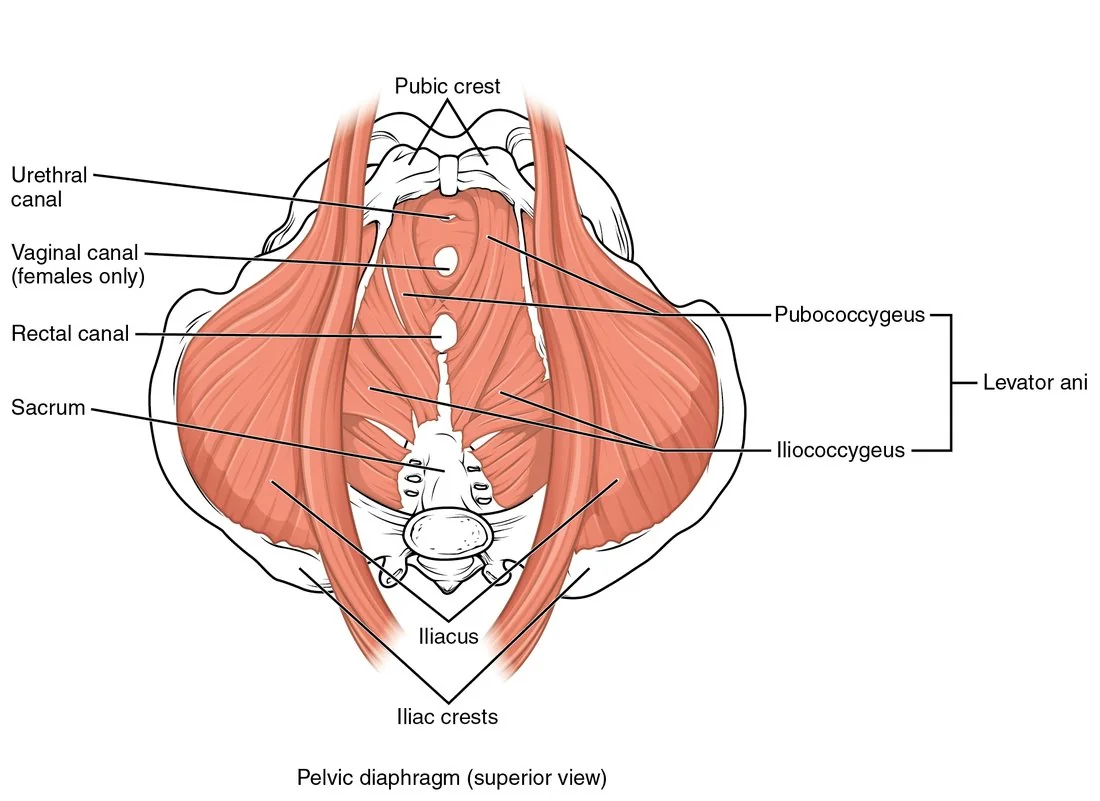
- Assessment of pelvic floor muscle contraction - digitally, graded on the modified Oxford scale; this establishes a baseline and confirms the patient can contract the right muscles
- Digital rectal examination in men - prostate size and consistency; also anal tone and faecal loading
- Neurological examination - lower limbs and perineal sensation where a neurological cause is possible
- Mobility, dexterity and cognition - central to functional incontinence and to what treatment is realistic
Investigations
- Urine dipstick and culture - to exclude urinary tract infection and to detect haematuria and glycosuria. Infection must be excluded before diagnosing overactive bladder
- Bladder diary (frequency-volume chart) for at least 3 days - covering both working and leisure days. This is the single most informative investigation: it records fluid intake, voided volumes, frequency, nocturia and leakage episodes, and frequently establishes the diagnosis and reveals excessive caffeine or fluid intake
- Post-void residual volume by bladder scan - essential where voiding difficulty or overflow is suspected; a significant residual changes management completely
- U&Es and creatinine - if retention or renal impairment is suspected
- Blood glucose / HbA1c - polyuria from undiagnosed diabetes
- Urodynamic studies - not routinely required before starting conservative treatment. NICE reserves them for before surgery in women with stress incontinence where the diagnosis is uncertain, for suspected detrusor overactivity or voiding dysfunction, and for previous surgery or anterior compartment prolapse
- Cystoscopy - if there is haematuria, recurrent infection, suspected bladder stones, tumour or fistula
- Renal tract ultrasound - where retention, hydronephrosis or renal impairment is suspected
- Pad testing - occasionally used to quantify leakage objectively
Management
Management follows NICE NG123, and the structure is consistent: treat reversible causes, then conservative measures, then drugs, then surgery. Conservative treatment should be given a genuine trial - it is effective and frequently skipped.1
General and lifestyle measures for everyone
- Treat reversible causes - UTI, constipation, atrophic vaginitis, and review the drug list
- Weight loss if BMI is 30 or above - one of the most effective single interventions for stress incontinence
- Reduce caffeine intake - specifically shown to help urgency and frequency
- Modify fluid intake - reduce if excessive, but increase if too low, since concentrated urine irritates the bladder; avoid restricting fluids as a coping strategy
- Stop smoking and treat chronic cough
- Treat constipation
- Practical measures - accessible toileting, appropriate clothing, commodes, and containment products (pads) as an adjunct or coping strategy, never as a substitute for assessment
Stress incontinence
- Supervised pelvic floor muscle training for at least 3 months - first line. NICE specifies at least 8 contractions performed 3 times daily, supervised by a specialist physiotherapist or continence nurse rather than delivered as a leaflet
- Continue training long term if it helps, as benefit is lost when the exercises stop
- Duloxetine - a serotonin-noradrenaline reuptake inhibitor that increases sphincter tone. It is second line and not routinely recommended; offered only where the patient declines surgery, with counselling about nausea and other adverse effects
- Surgery - for those who fail conservative treatment: colposuspension, autologous rectus fascial sling, or retropubic mid-urethral mesh sling. Note that mesh procedures are subject to significant restrictions and heightened consent requirements in the UK following the safety concerns identified by the Cumberlege review, and patients must be counselled accordingly
- Intramural bulking agents - a less invasive option with lower efficacy and a need for repeat procedures
- Artificial urinary sphincter - mainly used in men with post-prostatectomy incontinence
Urge incontinence and overactive bladder
- Supervised bladder training for at least 6 weeks - first line. The patient voids to a schedule and progressively lengthens the interval, retraining bladder capacity and suppressing urgency
- Antimuscarinic drug if bladder training is insufficient - oxybutynin, tolterodine or darifenacin are the NICE first choices. Review after 4 weeks. Side effects are predictably anticholinergic: dry mouth, constipation, blurred vision, urinary retention and cognitive impairment
- Mirabegron - a beta-3 adrenoceptor agonist causing detrusor relaxation. Particularly useful where anticholinergic burden is a concern, but contraindicated in uncontrolled hypertension (blood pressure must be monitored)
- Vaginal oestrogen - for postmenopausal women with vaginal atrophy; helpful for both urgency and recurrent UTI
- Specialist options where drugs fail: botulinum toxin A injection into the detrusor (effective, but patients must be willing and able to perform intermittent self-catheterisation because of the risk of retention), percutaneous tibial nerve stimulation, sacral nerve stimulation, and rarely augmentation cystoplasty or urinary diversion
Complications
- Psychological and social harm - embarrassment, anxiety, depression, social withdrawal and loss of independence; frequently the dominant impact
- Sexual dysfunction and relationship difficulties, including coital incontinence
- Skin complications - incontinence-associated dermatitis, excoriation, candidal infection and pressure ulcers
- Falls and fractures - from rushing to the toilet, particularly with nocturia in older people
- Recurrent urinary tract infections
- Sleep disturbance from nocturia, with consequent daytime fatigue
- Admission to residential care - incontinence is one of the strongest predictors
- Complications of treatment - anticholinergic side effects and cognitive decline; mesh-related pain, erosion and reoperation; retention after botulinum toxin; surgical complications including voiding dysfunction and de novo urgency
Red flags
Prognosis
Most patients improve substantially with conservative treatment alone. Around two-thirds of women with stress incontinence report cure or significant improvement with supervised pelvic floor muscle training, and bladder training combined with caffeine reduction is similarly effective for many with urge symptoms. The greatest determinants of success are supervision and adherence - unsupervised exercises given as a leaflet perform considerably worse than a structured physiotherapy programme, and benefit fades if the exercises are abandoned.
Drug treatment for overactive bladder produces modest benefit - typically a reduction of one or two leakage episodes per day - and discontinuation rates are high, largely because of anticholinergic side effects. This is why realistic expectations should be set at the outset and why treatment is reviewed at 4 weeks rather than repeated indefinitely.
Surgery for stress incontinence has high success rates, with continence achieved in the region of 80-90% at one year for colposuspension and sling procedures, though efficacy declines over subsequent years and reoperation is sometimes needed. The counselling around mesh in particular must be thorough given the recognised risk of chronic pain and erosion. Overall, incontinence is best regarded as a chronic condition that is managed rather than cured in many patients - but one where the difference between an unassessed patient in pads and a properly treated patient is enormous, which is why asking the question in the first place matters so much.
References
- NICE NG123. Urinary incontinence and pelvic organ prolapse in women: management. 2019. Available here
- NICE Clinical Knowledge Summaries. Incontinence - urinary, in women. Available here
- NICE CG97. Lower urinary tract symptoms in men: management. 2010, updated 2015. Available here
- NICE CG171 / NG123. Urinary incontinence in neurological disease. Available here
- Independent Medicines and Medical Devices Safety Review (Cumberlege Review). First Do No Harm. 2020. Available here
- BNF. Antimuscarinics for urinary frequency and incontinence, and mirabegron. Available here
- OpenStax, CC BY 4.0, via Wikimedia Commons. Available here
This article is written for revision and education. It is not clinical guidance and must not be used to make decisions about the care of a patient. Always check current NICE guidance and local protocols.