
Lymphoma
Key points
- Lymphoma: malignancy arising from lymphoid cells, usually presenting with lymphadenopathy. Split into Hodgkin lymphoma (defined by Reed-Sternberg cells) and the far larger, more heterogeneous group of non-Hodgkin lymphomas (NHL).
- Hodgkin lymphoma: a bimodal age distribution (young adults and the elderly), strongly associated with EBV, typically spreads in a predictable, contiguous fashion between nodal groups, and has an excellent prognosis with modern treatment.
- Non-Hodgkin lymphoma: a heterogeneous group, mostly B-cell in origin. Diffuse large B-cell lymphoma (DLBCL) is the commonest aggressive subtype; follicular lymphoma is the commonest indolent subtype; Burkitt lymphoma is the most rapidly proliferating human tumour.
- B symptoms: fever, drenching night sweats and unintentional weight loss (>10% in 6 months) - present in both types, but a marker of more advanced or aggressive disease, and part of formal staging.
- Diagnosis: excision (or core) lymph node biopsy is required - fine needle aspiration alone is inadequate, since architecture and immunohistochemistry are needed to subtype the lymphoma correctly.
- Staging: the Ann Arbor system (stages I-IV, with A/B for absence/presence of B symptoms), now typically assigned using PET-CT, which also assesses treatment response.
- Management: Hodgkin lymphoma: ABVD chemotherapy +/- radiotherapy. Aggressive B-cell NHL (e.g. DLBCL): R-CHOP. Indolent lymphoma (e.g. follicular): often watch and wait if asymptomatic.
- Key associations: Burkitt lymphoma with EBV and malaria (endemic form) or sporadically with a c-MYC translocation; MALT lymphoma with Helicobacter pylori (and can regress with eradication therapy alone).
Introduction
Lymphoma is a malignancy of lymphocytes, typically arising within lymph nodes but capable of involving almost any organ. The fundamental division is between Hodgkin lymphoma, a single, biologically distinct entity defined by the presence of Reed-Sternberg cells, and non-Hodgkin lymphoma (NHL), an umbrella term covering a large and diverse group of B-cell and T-cell malignancies with very different behaviours and treatments.1
Hodgkin lymphoma
Hodgkin lymphoma has a characteristic bimodal age distribution, with peaks in young adults (20s) and again in the elderly. It is strongly associated with prior Epstein-Barr virus (EBV) infection.
Pathology
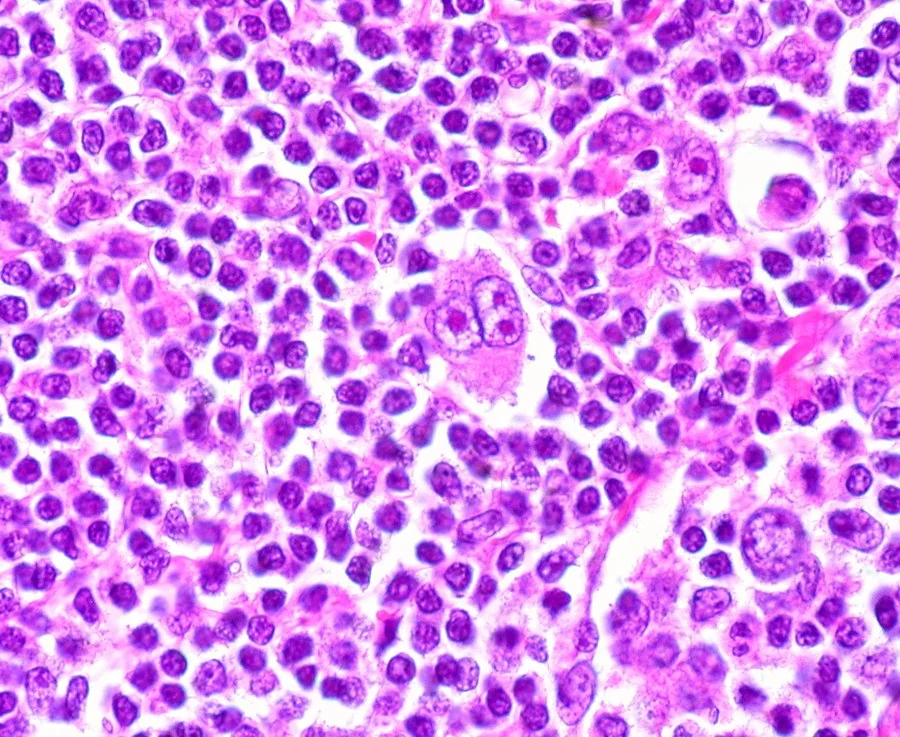
Defined by the presence of Reed-Sternberg cells - large, binucleate ("owl's eye") malignant B cells - within a background of reactive inflammatory cells that make up the bulk of the tumour mass. Nodular sclerosing is the commonest histological subtype in the UK.
Clinical features
- Painless, firm, rubbery lymphadenopathy, most often cervical or supraclavicular, which can wax and wane in size
- Alcohol-induced lymph node pain - a classic, if uncommon, and highly specific feature
- B symptoms - fever, drenching night sweats, unintentional weight loss - present in a minority but important for staging and prognosis
- Pruritus, sometimes generalised and severe
- Mediastinal mass - may be found incidentally on a chest X-ray, or cause cough/breathlessness, or rarely superior vena cava obstruction
- Spread is characteristically contiguous, moving predictably from one nodal group to the adjacent one, unlike the more unpredictable spread of NHL
Management
ABVD chemotherapy (doxorubicin, bleomycin, vinblastine, dacarbazine) is the standard regimen, with radiotherapy added for localised or bulky disease. Outcomes are excellent, particularly in early-stage disease.2
Non-Hodgkin lymphoma
A large, heterogeneous group, roughly 85% B-cell and 15% T-cell in origin, ranging from indolent disease that may never need treatment to highly aggressive tumours that are fatal within weeks if untreated but curable with prompt chemotherapy.
Key subtypes
| Subtype | Behaviour | Key features |
|---|---|---|
| Diffuse large B-cell lymphoma (DLBCL) | Aggressive | The commonest NHL subtype; rapidly enlarging nodal or extranodal mass; potentially curable with R-CHOP |
| Follicular lymphoma | Indolent | The commonest indolent NHL; widespread lymphadenopathy at diagnosis; often incurable but very slow-growing - many patients live for decades |
| Burkitt lymphoma | Highly aggressive | The fastest-growing human tumour; associated with EBV (endemic, African, jaw involvement) and a c-MYC translocation t(8;14); classic "starry sky" histology from macrophages engulfing apoptotic tumour cells; high risk of tumour lysis syndrome with treatment |
| MALT lymphoma | Indolent (extranodal) | Arises in mucosa-associated lymphoid tissue, classically gastric, strongly associated with Helicobacter pylori; early disease can regress with H. pylori eradication alone |
| Mantle cell lymphoma | Aggressive | t(11;14) causing cyclin D1 overexpression; often disseminated at diagnosis with bone marrow and GI involvement |
Clinical features
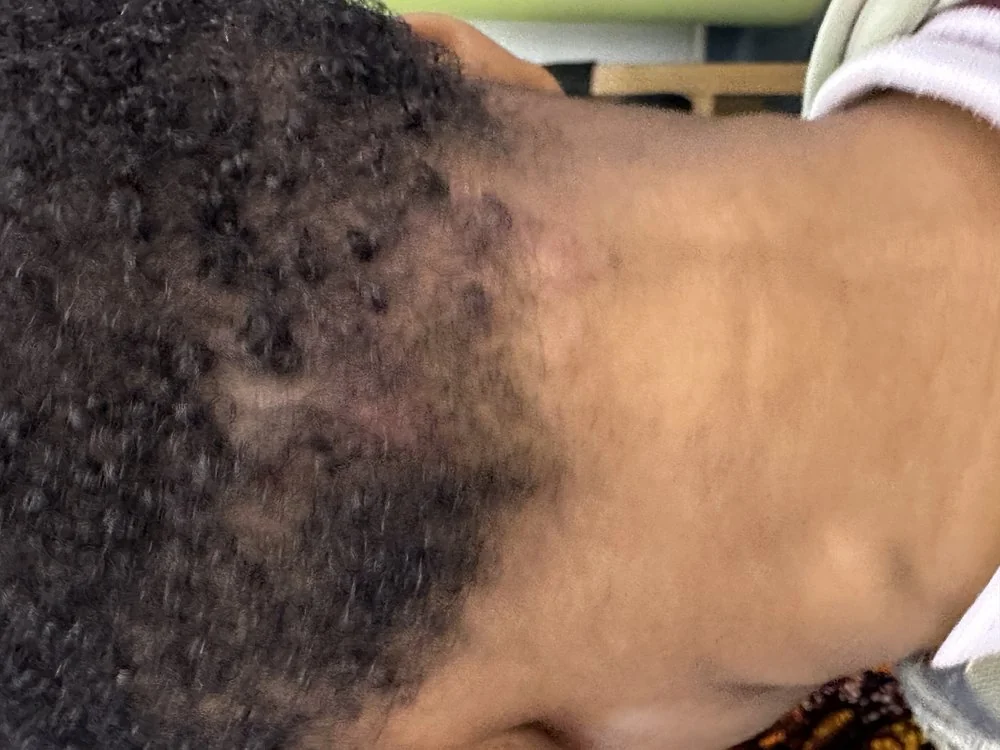
- Lymphadenopathy, but less predictably contiguous in spread than Hodgkin lymphoma, and more often with extranodal involvement (GI tract, skin, CNS, bone marrow)
- B symptoms are common in aggressive subtypes
- Symptoms from the specific site involved - e.g. dyspepsia in gastric MALT lymphoma, abdominal mass in Burkitt lymphoma, skin plaques in cutaneous T-cell lymphoma
- Bone marrow involvement causing cytopenias is more frequent than in Hodgkin lymphoma
Management
- Aggressive B-cell NHL (e.g. DLBCL): R-CHOP (rituximab, cyclophosphamide, doxorubicin, vincristine, prednisolone) with curative intent
- Follicular and other indolent lymphomas: "watch and wait" if asymptomatic and low burden - treatment does not improve survival in this setting and adds toxicity without benefit; rituximab-based therapy when treatment is indicated
- Burkitt lymphoma: intensive, short-cycle chemotherapy with aggressive tumour lysis syndrome prophylaxis, given the extremely high proliferation rate
- Gastric MALT lymphoma: H. pylori eradication therapy alone for early, localised disease
- CAR-T cell therapy and other novel immunotherapies for relapsed/refractory aggressive lymphoma
Investigations common to lymphoma
- Excision or core lymph node biopsy is required for diagnosis - fine needle aspiration alone is inadequate, since architecture, immunohistochemistry and (where relevant) molecular/cytogenetic testing are needed to reliably subtype lymphoma
- FBC, blood film, LDH and urate - LDH is a marker of tumour bulk/proliferation and part of prognostic scoring; urate anticipates tumour lysis risk
- PET-CT for staging in most subtypes, and to assess treatment response (particularly useful given lymphoma's characteristic FDG avidity)
- Bone marrow biopsy in selected cases to assess marrow involvement
- HIV testing - lymphoma risk is significantly increased in HIV, and this changes management
Ann Arbor staging
| Stage | Extent of disease |
|---|---|
| I | Single lymph node region |
| II | Two or more regions, same side of the diaphragm |
| III | Regions on both sides of the diaphragm |
| IV | Diffuse or disseminated extranodal involvement (e.g. bone marrow, liver) |
Each stage is suffixed A (no B symptoms) or B (B symptoms present), which affects prognosis and treatment intensity.
Complications
- Superior vena cava obstruction from a mediastinal mass
- Spinal cord compression from vertebral or epidural disease
- Tumour lysis syndrome, especially with rapidly proliferating subtypes (Burkitt lymphoma) or high tumour burden at treatment initiation
- Treatment-related toxicity - anthracycline cardiotoxicity, bleomycin pulmonary toxicity, infertility, and an increased long-term risk of secondary malignancy, particularly after combined chemoradiotherapy
- Immunosuppression from both the disease and its treatment, increasing infection risk
- Richter-type transformation of indolent lymphoma into a more aggressive subtype over time
Red flags
Prognosis
Hodgkin lymphoma has one of the best prognoses in oncology, with over 80-90% cure rates for early-stage disease and good outcomes even in advanced disease with modern combination chemotherapy.2
Prognosis in non-Hodgkin lymphoma varies enormously by subtype: DLBCL is potentially curable with R-CHOP in a majority of patients, Burkitt lymphoma has high cure rates with intensive short-course chemotherapy despite its aggressive behaviour, while follicular lymphoma typically follows an indolent, relapsing-remitting course over many years - not usually curable, but compatible with long survival and good quality of life for long periods.
References
- Shanbhag S, Ambinder RF. Hodgkin lymphoma: a review and update on recent progress. CA Cancer J Clin. 2018. Available here
- Armitage JO, Gascoyne RD, Lunning MA, Cavalli F. Non-Hodgkin lymphoma. Lancet. 2017. Available here
- British Society for Haematology / British Committee for Standards in Haematology lymphoma guidelines. Available here
- Ed Uthman, CC BY-SA 2.0, via Wikimedia Commons. Available here
- Whispyhistory, CC0, via Wikimedia Commons. Available here
- NICE. Suspected cancer: recognition and referral (NG12) - lymphoma. Available here
This article is written for revision and education. It is not clinical guidance and must not be used to make decisions about the care of a patient. Always check current NICE guidance and local protocols.