
Zoonotic Infections and Lyme Disease
Key points
- Lyme disease: caused by Borrelia burgdorferi, transmitted by an Ixodes tick bite - UK hotspots include the New Forest, Scottish Highlands and South Downs.
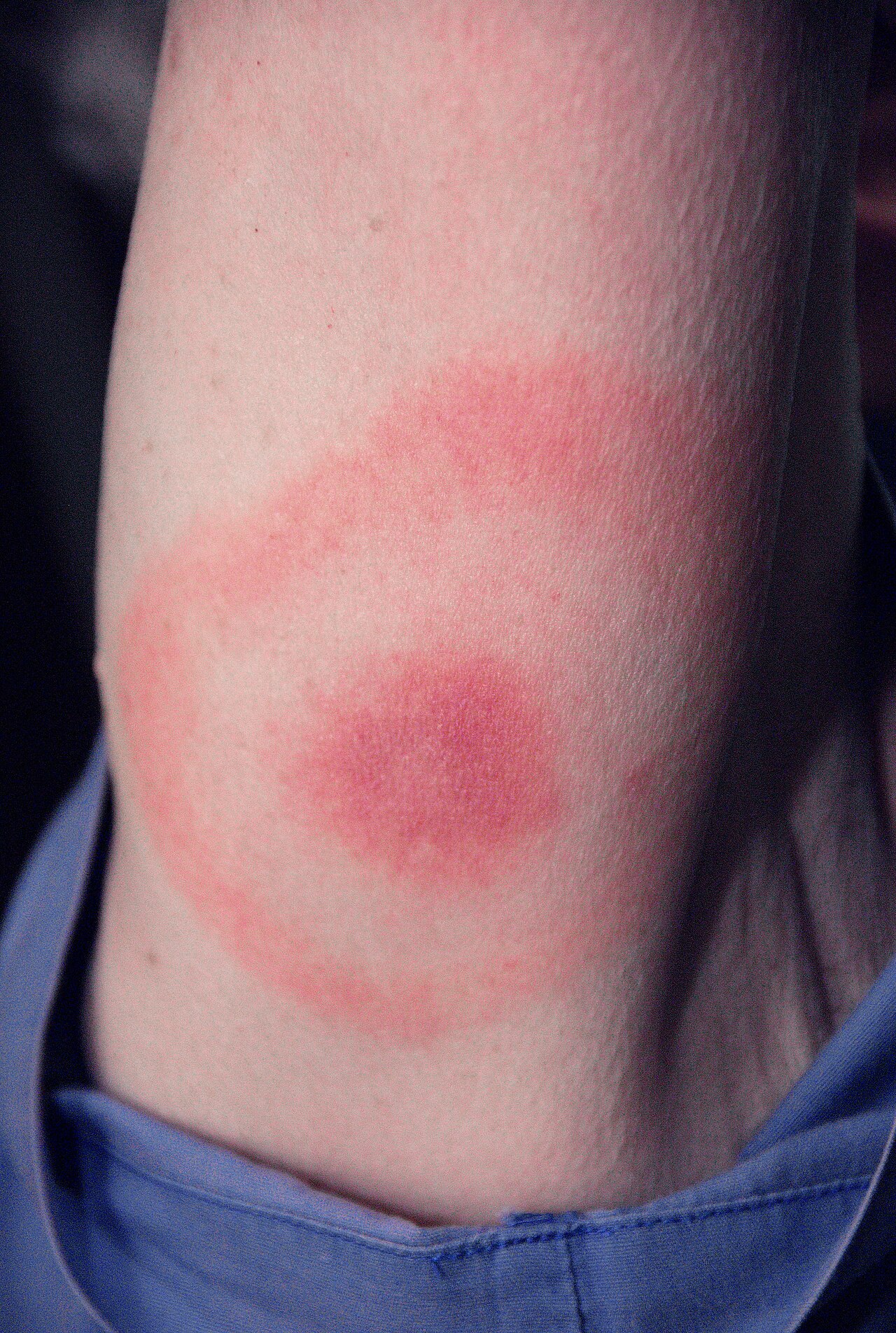
- Erythema migrans: an expanding, often annular "bullseye" rash at the bite site - diagnostic on its own, and treatment should start on this clinical finding without waiting for serology.
- Serology pitfall: antibody tests can be falsely negative in the first few weeks, before the immune response has developed - a negative early test does not exclude Lyme disease.
- Treatment: doxycycline first-line for most stages; IV ceftriaxone for neuroborreliosis or cardiac involvement with high-degree block.
- The exposure history is the key to every zoonosis: rat-contaminated water (leptospirosis), unpasteurised dairy or livestock (brucellosis), parturient sheep or goats (Q fever), and bird contact (psittacosis) each point to a specific diagnosis.
- Rabies: near-universally fatal once symptomatic - the emergency is post-exposure prophylaxis (wound washing, immunoglobulin and vaccine) after any bite from a mammal in an endemic country.
- Leptospirosis: conjunctival suffusion (redness without discharge) is a classically taught sign; severe disease (Weil's disease) causes jaundice, acute kidney injury and haemorrhage.
Introduction
Zoonotic infections are transmitted from animals to humans, and span a wide range of organisms, exposures and clinical pictures. In the UK, Lyme disease is by far the most clinically important, both because tick habitats are widespread across the country and because its early presentation - a single expanding rash - is highly recognisable and treatable if caught promptly. A smaller group of other zoonoses recur reliably in exams because each is unlocked by a specific, memorable exposure history rather than by a distinctive clinical picture alone.
Lyme disease
Caused by spirochaetes of the Borrelia burgdorferi complex, transmitted by the bite of an infected Ixodes tick. UK hotspots include the New Forest, the Scottish Highlands, the South Downs, the Lake District and Thetford Forest - anywhere with woodland, heathland or long grass frequented by deer and other tick hosts. Transmission risk rises with the duration of tick attachment, generally quoted as requiring at least 24-36 hours, which is the rationale behind prompt tick removal as a preventive measure.
Clinical stages
| Stage | Timing | Features |
|---|---|---|
| Early localised | Days to 4 weeks after the bite | Erythema migrans - an expanding, often annular rash with central clearing at the bite site, usually painless and non-itchy; may accompany mild flu-like symptoms |
| Early disseminated | Weeks to months | Multiple erythema migrans lesions; neurological involvement (facial nerve palsy, sometimes bilateral; lymphocytic meningitis; painful radiculopathy - Bannwarth syndrome); cardiac involvement (Lyme carditis, causing atrioventricular block); migratory joint and muscle pain |
| Late/persistent | Months to years | Lyme arthritis - typically a large-joint mono- or oligoarthritis, especially the knee; chronic neurological symptoms; acrodermatitis chronica atrophicans (a rare, bluish-red skin discolouration, mainly associated with European Borrelia strains) |
Diagnosis
Where the rash is absent or atypical, or the presentation is disseminated (neurological, cardiac or arthritic), the standard approach is an ELISA screening test followed by a confirmatory immunoblot (Western blot) in positive or equivocal cases.
Management
- Doxycycline - first-line for most adults across early localised and early disseminated disease, typically for 2-3 weeks
- Amoxicillin - an alternative where doxycycline is contraindicated, for example in pregnancy or young children
- IV ceftriaxone - used for neuroborreliosis and for cardiac involvement with high-degree atrioventricular block, reflecting the need for more reliable CNS and systemic penetration
Prevention
Bite avoidance (covering skin, insect repellent, staying on paths in high-risk areas) and prompt, correct tick removal are the mainstays - grasp the tick as close to the skin as possible with fine-tipped tweezers and pull straight upward with steady pressure, avoiding twisting or squeezing the body, which can increase the risk of transmission. There is currently no Lyme disease vaccine available in the UK. Routine antibiotic prophylaxis after a tick bite is not standard UK practice; management is generally watchful waiting with clear safety-netting advice to seek review if a rash or symptoms develop.
Other zoonoses by exposure
Each of these is best remembered through its characteristic exposure history, which is usually the fastest route to the diagnosis in an exam vignette.
| Infection | Organism | Exposure | Key features | Treatment |
|---|---|---|---|---|
| Leptospirosis (Weil's disease) | Leptospira interrogans | Water contaminated with infected rat urine - sewage work, farming, canoeing or wild swimming | Biphasic illness: initial flu-like phase, then in severe disease jaundice, acute kidney injury, haemorrhage and conjunctival suffusion (redness without discharge) | Doxycycline or benzylpenicillin; supportive care for severe disease |
| Brucellosis | Brucella species | Unpasteurised dairy products, or contact with livestock | Undulant (relapsing) fever, arthralgia, hepatosplenomegaly | Combination therapy (e.g. doxycycline plus rifampicin or streptomycin) to reduce the risk of relapse |
| Q fever | Coxiella burnetii | Inhaling dust contaminated by parturient sheep, goats or cattle | Flu-like illness; chronic infection can cause culture-negative endocarditis | Doxycycline |
| Psittacosis | Chlamydia psittaci | Contact with birds, especially parrots and other psittacine species | Atypical pneumonia | Doxycycline |
| Cat scratch disease | Bartonella henselae | Cat scratch or bite | Regional lymphadenopathy, usually self-limiting | Usually none; azithromycin if more severe |
| Rabies | Rabies virus (lyssavirus) | Bite or scratch from an infected mammal, chiefly dogs, in an endemic country | Once symptomatic: agitation, hydrophobia, hypersalivation - almost universally fatal | Post-exposure prophylaxis (wound washing, rabies immunoglobulin and vaccine course) - the emergency is prevention, not treatment of established disease |
| Anthrax | Bacillus anthracis | Contact with infected animal hides, wool or hair ("woolsorter's disease") | Cutaneous disease is commonest - a painless black eschar | Ciprofloxacin or doxycycline |
Investigations
Investigation is directed by the exposure history and suspected organism rather than a fixed panel.
- Lyme serology (ELISA then immunoblot) - for disseminated or atypical presentations, understanding its early-window limitations as above
- Blood cultures - leptospirosis and brucellosis can both be cultured, though leptospiral culture is slow and serology (or PCR) is often used instead
- Leptospira serology/PCR - given the biphasic illness and the risk of missing the diagnosis if testing is done only in the very early phase
- LFTs, U&Es and clotting - for anyone with suspected severe leptospirosis, given the risk of hepatic, renal and haemorrhagic complications
- Serology or PCR for Coxiella, Bartonella or Chlamydia psittaci, guided by the specific exposure and clinical picture
- Echocardiography - if chronic Q fever endocarditis is suspected, particularly with a relevant farming or animal exposure and culture-negative endocarditis
Red flags
Prognosis
Lyme disease treated at the erythema migrans stage has an excellent prognosis, with most patients recovering fully; delayed diagnosis increases the risk of disseminated neurological, cardiac or joint complications, some of which can be slow to resolve even with appropriate antibiotics. Most other zoonoses discussed here respond well to prompt, correctly targeted antibiotic treatment, with the crucial exception of rabies, where prognosis is dictated almost entirely by whether post-exposure prophylaxis was given before symptoms began.
References
- NICE NG95. Lyme disease. 2018. Available here
- UK Health Security Agency. Lyme disease: guidance, data and analysis. Available here
- NICE Clinical Knowledge Summaries. Lyme disease. Available here
- UK Health Security Agency. Rabies: guidance, data and analysis. Available here
- Public Health England / UKHSA. Guidelines for the public health management of leptospirosis and other zoonotic infections. Available here
This article is written for revision and education. It is not clinical guidance and must not be used to make decisions about the care of a patient. Always check current NICE guidance and local protocols.