
Mumps
Key points
- Mumps: an acute paramyxovirus infection spread by respiratory droplets, with a long incubation period (around 14-25 days) and a prodrome followed by parotid gland swelling.
- Parotitis: painful swelling that obscures the angle of the jaw, typically starting unilaterally and often becoming bilateral within days - worse on eating or drinking, especially acidic foods.
- Orchitis: the commonest complication in post-pubertal males, affecting around a third, usually unilateral and appearing 4-8 days after parotitis - subfertility is a recognised but uncommon long-term consequence.
- Meningitis: the commonest CNS complication, usually self-limiting; encephalitis is rare but more serious.
- Sensorineural hearing loss: usually unilateral and often transient, but a recognised cause of permanent acquired deafness.
- Prevention: two doses of the MMR vaccine - UK outbreaks have recurred in cohorts who missed vaccination, notably around the discredited MMR-autism scare.
- Diagnosis: usually clinical; confirm with oral fluid or serum IgM/PCR if needed, and notify UKHSA regardless of laboratory confirmation.
Introduction
Mumps is caused by the mumps virus, a paramyxovirus spread by respiratory droplets and direct contact with saliva. It has a notably long incubation period of around 14-25 days (commonly quoted as 16-18 days), and classically causes painful swelling of the parotid glands - the salivary glands sitting anterior to and below the ear.
It is preventable by vaccination, and UK cases are concentrated in people who missed the MMR vaccine, particularly a cohort born around the late 1990s and early 2000s affected by the now fully discredited and retracted claim linking MMR to autism. Periodic outbreaks, especially among university students and in other settings of close social contact, keep this a live public health issue rather than a purely historical topic.
Clinical features
A non-specific prodrome of fever, headache, malaise and myalgia typically precedes the characteristic gland swelling by 1-2 days.
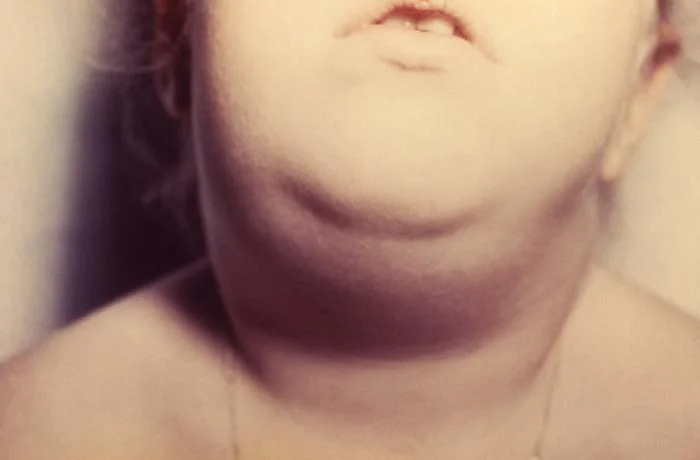
- Parotid gland swelling - typically starts unilaterally and becomes bilateral in the majority of cases within a few days; the swelling obscures the angle of the jaw, a useful bedside distinction from cervical lymphadenopathy, which does not
- Pain, worse on eating or drinking, particularly with acidic foods and drinks that stimulate salivary flow (a useful, if uncomfortable, bedside clue)
- Earache, and sometimes trismus (difficulty opening the mouth)
- Submandibular gland involvement can also occur, alongside or instead of parotid swelling
- A significant minority of infections are subclinical or very mild, particularly in younger children
Differential diagnosis
- Bacterial parotitis - typically unilateral, the patient more systemically unwell, and pus may be expressed from the parotid (Stensen's) duct on examination
- Other viral causes of parotitis - parainfluenza, influenza A, EBV, CMV and HIV can all cause a similar picture
- Sialolithiasis (salivary duct stone) - typically causes pain and swelling that worsens specifically with eating, without the systemic prodrome
- Cervical lymphadenopathy - from reactive causes or other infection; does not obscure the angle of the jaw in the way true parotid swelling does
- Sjögren syndrome and sarcoidosis - chronic, bilateral parotid enlargement in an adult, without an acute infective prodrome
Investigations
In a typical clinical picture, particularly during a known outbreak, diagnosis is usually made clinically. Laboratory confirmation is useful where the diagnosis is uncertain, for public health surveillance, or to support notification.
- Oral fluid or salivary swab for mumps-specific IgM and PCR - the standard confirmatory test in the UK
- Serum IgM - can also be used, though may be negative very early in the illness
- Amylase is often raised (from salivary gland involvement), but is not specific and cannot be used alone to diagnose or exclude pancreatitis as a complication - a pancreas-specific lipase or amylase isoenzyme is needed if pancreatitis is genuinely suspected
Management
Treatment is supportive, since there is no specific antiviral therapy.
- Analgesia and antipyretics (paracetamol or NSAIDs)
- Adequate fluid intake
- Avoiding acidic foods and drinks, which provoke pain by stimulating salivation
- Rest during the acute illness
- School or work exclusion for 5 days from the onset of parotid swelling, reflecting the period of greatest infectiousness
Prevention
The MMR (measles, mumps and rubella) vaccine is a live attenuated vaccine given as two doses in the UK schedule (around 12-13 months, and again at 3 years 4 months). Mumps component efficacy is somewhat lower than for measles or rubella, so vaccinated individuals can still occasionally develop mumps, usually with milder disease - this is why outbreaks can still occur even in reasonably well-vaccinated populations, though far less often and less severely than in unvaccinated ones. MMR given to a contact after an exposure does not reliably prevent mumps in someone already incubating the virus, but is still recommended for unimmunised or partially immunised contacts to protect against future exposures.
Complications
Orchitis
The commonest complication in post-pubertal males, affecting around a third of those infected after puberty, and rare before it. Typically unilateral, presenting with painful testicular swelling 4-8 days after the onset of parotitis. Some degree of testicular atrophy can follow, and subfertility is a recognised long-term risk, though true infertility is uncommon since the contralateral testis is usually unaffected in unilateral disease.
Other complications
- Oophoritis - the female equivalent of orchitis, less common and rarely affecting fertility
- Viral (aseptic) meningitis - the commonest CNS complication, generally self-limiting
- Encephalitis - rare, but more serious, and the main cause of mumps-related mortality when it occurs
- Sensorineural hearing loss - usually unilateral and often transient, but a recognised and important cause of permanent acquired deafness
- Pancreatitis - abdominal pain with a genuinely raised pancreatic-specific lipase or amylase isoenzyme, distinguishing it from the non-specific salivary amylase rise
- Spontaneous miscarriage if infection occurs in the first trimester of pregnancy, though no clear teratogenic effect on the fetus has been established
Red flags
Prognosis
Mumps is generally a self-limiting illness, with parotid swelling settling over 7-10 days and a good overall prognosis. Serious complications - encephalitis, permanent deafness, or infertility from bilateral orchitis - are uncommon but are the reason the disease remains a public health priority, and the reason maintaining high MMR vaccine coverage across the population matters even though most individual cases are mild.
References
- NICE Clinical Knowledge Summaries. Mumps. Available here
- UK Health Security Agency. Mumps: guidance and data. Available here
- Green Book. Mumps - chapter 23. UK Health Security Agency immunisation guidance. Available here
- Hviid A, Rubin S, Muhlemann K. Mumps. The Lancet. 2008. Available here
This article is written for revision and education. It is not clinical guidance and must not be used to make decisions about the care of a patient. Always check current NICE guidance and local protocols.